The Private Perfume Laboratory: How Bespoke Olfactory Architecture Became Ultra-Luxury Living's Most Invisibly Refined Room
March 29, 2026 · 15 min read
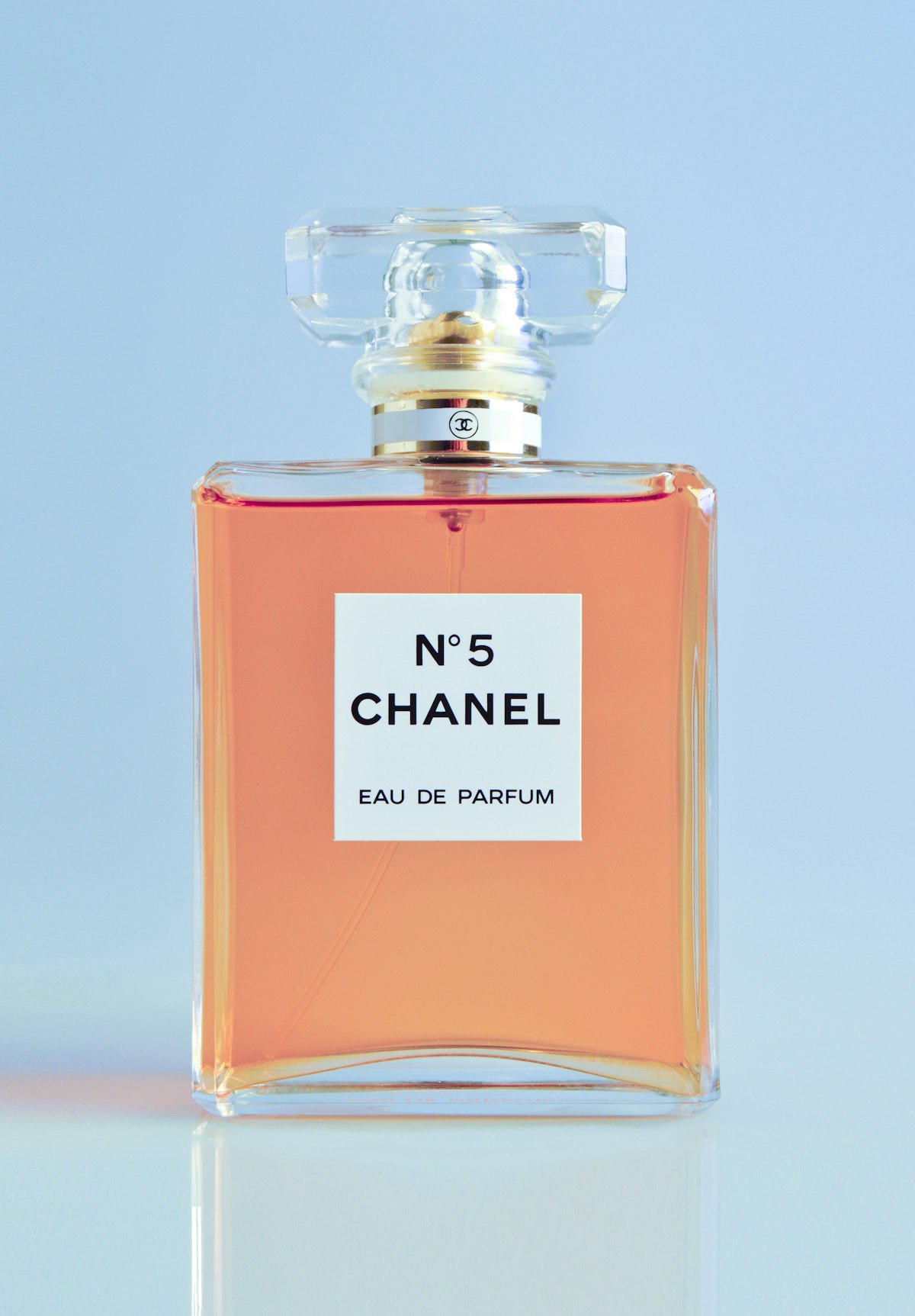
The private wine cellar has been, for two decades, the definitive signifier of domestic luxury ambition. Before it, the home cinema. Before that, the indoor pool. Each era of ultra-luxury residential architecture has produced a room that, through some combination of cost, technical complexity, and cultural signalling, establishes the boundary between the merely wealthy and the genuinely affluent. In the homes now being designed for the world's most discerning clients — the €30 million-plus residences in Monaco, the £50 million London townhouses, the $100 million Palm Beach estates — the room that is claiming this distinction is one that most visitors will never see and whose primary medium is invisible: the private perfume laboratory.
This is not a vanity project dressed up as craft. The private perfumery — a purpose-built space designed for the creation, maturation, and storage of bespoke fragrances — represents a convergence of several trends that are reshaping ultra-luxury residential design: the elevation of sensory experience over visual spectacle, the pursuit of absolute personalisation, and the growing recognition that the most powerful luxury is the luxury that cannot be purchased off a shelf.
The Architecture of Scent
Designing a functional perfume laboratory within a residential setting presents technical challenges that are, to the architects and engineers involved, genuinely fascinating. The primary requirement is environmental control of extraordinary precision. Natural perfume ingredients — essential oils, absolutes, tinctures, and the raw botanical materials from which they derive — are chemically sensitive to temperature, humidity, light, and air movement. A properly equipped private perfumery maintains ambient temperature at 18-20°C with fluctuations of no more than 0.5 degrees, relative humidity between 55-65%, and near-total light control, since ultraviolet radiation degrades many aromatic compounds within hours of exposure.
The ventilation system is the room's most technically demanding element. A perfume laboratory must balance two contradictory requirements: sufficient air exchange to prevent the accumulation of volatile organic compounds (some of which, at concentration, are physiologically unpleasant), and minimal air movement to preserve the olfactory integrity of compositions during the blending process. The solution, borrowed from pharmaceutical clean-room design and adapted for residential aesthetics, typically involves laminar flow systems concealed within architectural elements — ceiling coffers, floor plinths, or wall panels — that deliver filtered, temperature-controlled air at velocities below 0.1 metres per second. The air moves, but the perfumer cannot feel it moving.
The material palette is equally specific. Work surfaces must be chemically inert (medical-grade stainless steel or borosilicate glass), as even polished marble or granite can absorb aromatic compounds and create olfactory interference during the blending process. Flooring is typically poured resin or sealed stone — nothing porous. Walls receive specialised coatings that resist the absorption of volatile molecules. The overall effect is a space that is simultaneously clinical and beautiful, combining the precision of a laboratory with the aesthetic refinement expected of a room that costs, fully equipped, between €200,000 and €500,000.
The Organ: Instrument of Composition
The centrepiece of any private perfumery is the organ — the tiered display structure that holds the perfumer's working palette of raw materials, arranged by olfactory family and volatility. A professional perfumer's organ typically holds 400-800 individual ingredients; a well-appointed private organ, curated for a specific client's aesthetic preferences, might hold 200-300. The organ's design — from its proportions and materials to its lighting and spatial organisation — is the element that most clearly distinguishes the serious private perfumery from the decorative gesture.
The finest private organs are commissioned from specialist craftsmen who work at the intersection of furniture making and scientific instrument design. A recent installation in a Geneva residence, designed by a Swiss atelier that previously built organs for two of France's major fragrance houses, features 280 hand-blown Murano glass bottles arranged in a five-tier arc of aged walnut, each bottle sitting in a precision-machined brass cradle with integrated LED backlighting calibrated to 2700K — warm enough to create visual warmth without producing UV radiation. The organ took fourteen months to build and install. Its cost, exclusive of the ingredients it houses, was approximately €180,000.
The Ingredient Vault
Adjacent to the working laboratory, the most serious private perfumeries incorporate an ingredient vault — a climate-controlled storage space designed to preserve rare and precious raw materials under conditions that maintain their olfactory integrity for years or decades. The vault addresses a reality of the contemporary fragrance ingredients market: many of the world's most extraordinary natural materials — genuine Indian sandalwood oil, Ethiopian frankincense of specific terroir, aged oud from Assamese agarwood — are becoming scarce as deforestation, climate change, and demand pressure reduce available supply.
A client who has invested in a private collection of these materials — a collection that might represent a procurement effort spanning years and requiring relationships with suppliers in India, the Middle East, Southeast Asia, and southern France — needs storage conditions that protect a material investment that can exceed €100,000 and an olfactory investment that is literally irreplaceable. The vault maintains temperatures between 12-15°C, humidity at 50-55%, in complete darkness, with nitrogen-flush capability for the most sensitive materials. In architectural terms, it resembles nothing so much as a scaled-down version of the controlled-environment storage facilities used by major museums for textile and organic collections.
The Maturation Library
Perfume, like wine, evolves with time. The maceration process — during which a freshly blended fragrance is left to rest, allowing its constituent molecules to interact, react, and achieve chemical equilibrium — can take weeks, months, or, for the most complex compositions, years. The maturation library is a dedicated space within the private perfumery where compositions-in-progress rest in sealed glass vessels under controlled conditions, developing the depth and coherence that distinguish a fully matured fragrance from a freshly blended one.
The visual effect of a well-stocked maturation library is quietly spectacular: rows of amber glass vessels — typically 500ml to 2-litre capacity — each labelled with a composition code, date, and brief olfactory note, arranged on shelving that combines practical accessibility with display elegance. Some clients maintain maturation libraries of thirty to fifty compositions, representing years of blending experiments, seasonal variations, and collaborative work with visiting perfumers. The library becomes, over time, an olfactory autobiography — a collection that documents not just aesthetic preferences but emotional states, travels, relationships, and memories encoded in molecular form.
The Whole-House Integration
The most sophisticated private perfumeries are not standalone rooms but the control centres for whole-house olfactory systems — integrated scent-delivery networks that allow the homeowner to programme different fragrances for different rooms, times of day, or occasions. These systems, developed by specialist firms that emerged from the commercial scent-marketing industry and pivoted toward the residential ultra-luxury market, use nebulisation technology (converting liquid fragrance into a dry nano-mist without heat, which would alter the scent profile) distributed through the building's HVAC system.
A recent installation in a London townhouse — seven bedrooms, four reception rooms, a private cinema, an indoor pool — features fourteen independently programmable scent zones, each drawing from a rotating library of twelve bespoke compositions created by the homeowner in collaboration with a Grasse-based perfumer. The entrance hall receives a composition built around bergamot, iris, and vetiver that communicates sophisticated welcome. The master bedroom transitions through three scent profiles across the day: an energising morning composition (citrus, green tea, ginger), a neutral midday baseline, and an evening programme of sandalwood, labdanum, and vanilla that supports circadian rhythm through olfactory cues. The swimming pool area receives an ozonic-aquatic composition that amplifies the sensory experience of water.
The Cultural Shift
The emergence of the private perfumery as a prestige room reflects a broader cultural shift in how ultra-luxury is understood and expressed. The visual arts — painting, sculpture, architecture — have dominated luxury's cultural language for centuries. The performing arts — music, particularly through the private concert space — added an auditory dimension. The wine cellar introduced taste. But scent — the sense most directly connected to memory, emotion, and the limbic system — remained architecturally unaddressed until the current generation of residential design began to take olfactory experience seriously.
The shift is partly demographic. The clients commissioning private perfumeries tend to be younger than the cohort that built wine cellars — late thirties to early fifties rather than fifties to seventies — and they tend to have cultural backgrounds in which fragrance carries particular significance. Middle Eastern clients, for whom the oud-based perfumery tradition represents centuries of cultural heritage, constitute a significant proportion of early adopters. French and Italian clients, steeped in European perfumery culture, represent another. But the fastest-growing segment is American and British clients who have discovered artisanal perfumery through the niche fragrance movement and want to take the final step from consumer to creator.
What they are building, in these invisible rooms where temperature is controlled to half a degree and air moves at imperceptible velocities, is not just a space for making perfume. They are building a room dedicated to the proposition that the highest form of luxury is not what you see, what you hear, or what you taste — but what you breathe.
In ultra-luxury's endless pursuit of the unseen, the private perfume laboratory represents the ultimate destination — a room whose masterwork is invisible, whose medium is air, and whose luxury is literally inhaled.