The Underground Renaissance: How Wine Cellars Became Ultra-Luxury's Most Coveted Architectural Statement
March 16, 2026 · 11 min read
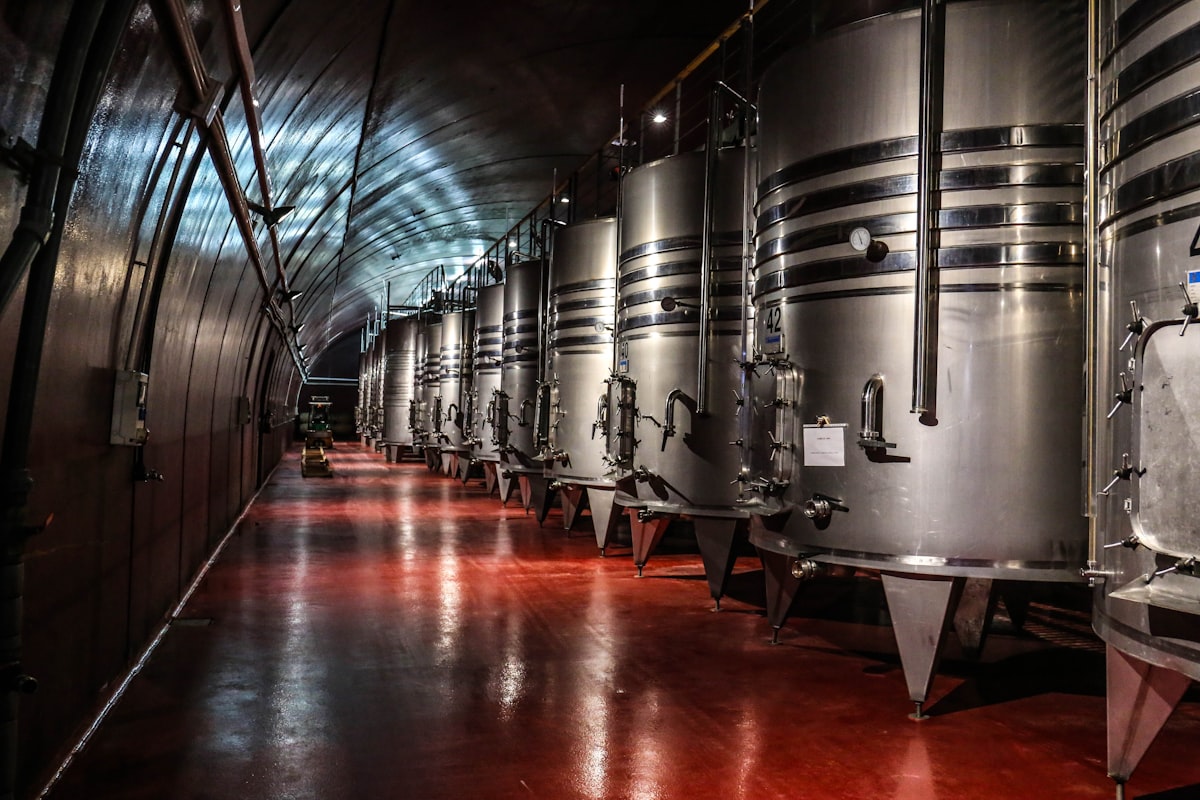
For most of architectural history, the wine cellar was a problem of physics. Temperature had to be constant — between 12 and 14 degrees Celsius. Humidity had to hover at 70%. Light had to be minimal. Vibration had to be nil. These constraints pushed wine storage underground, into basements and caves where the earth itself provided insulation. The cellar was, by necessity, the least designed room in the house: functional, dark, utilitarian. Its purpose was preservation, not presentation. Then, somewhere around 2015, something shifted. Architects began receiving briefs that treated the wine cellar not as infrastructure but as destination. Clients weren't asking for storage. They were asking for theatre. And the most prestigious room in the ultra-luxury home migrated from the penthouse to the basement.
The Climate-Controlled Cathedral
The catalyst was technology. Modern climate-control systems — split units, ducted systems, through-wall cooling — liberated the wine cellar from its subterranean constraints. A cellar no longer needed to be underground. It could be a glass-walled room in a living area, a converted garage, or a purpose-built pavilion in a garden. But paradoxically, this freedom sent the best wine cellars deeper underground. Once the thermal constraint was solved mechanically, architects were free to excavate purely for drama — and drama, in architecture, comes from descent. The approach to a great wine cellar is now choreographed with the precision of a museum entrance: a spiral staircase in blackened steel, LED cove lighting that shifts from amber to cool white as temperature drops, the sound of your footsteps changing from hardwood to stone to gravel. By the time you reach the cellar itself, you've undergone a sensory transition as deliberate as walking into a Japanese tea house.
The London Basement Wars
Nowhere has the wine cellar revolution been more dramatic than in London's prime postcodes. The phenomenon known as "iceberg houses" — where the underground extension exceeds the visible footprint — was initially driven by swimming pools and cinemas. But by 2020, the wine cellar had become the centrepiece of the typical £5-10 million basement excavation in Kensington, Chelsea, and Belgravia. These aren't cellars in any traditional sense. They're climate-controlled galleries. A recent project by architectural practice Lawson Robb for a Mayfair townhouse created a 200-square-metre underground space housing 8,000 bottles, a tasting room for 12, a temperature-controlled cheese ageing room, and a "discovery corridor" where the client's rarest bottles are displayed individually in backlit niches, each with a QR code linking to provenance documentation, tasting notes, and auction price history.
The project cost approximately £2.8 million — roughly £350 per bottle capacity. This might seem extravagant until you consider the contents: the client's collection, independently appraised at £12 million, includes verticals of Romanée-Conti dating to 1945, a complete set of Pétrus from 1961 to present, and a case of 1947 Cheval Blanc purchased at Christie's for £160,000. At that level, the cellar isn't an indulgence. It's an insurance policy. Fine wine stored improperly can lose 40-60% of its value. A properly engineered cellar doesn't just preserve — it proves provenance. Every bottle has a documented storage history at precisely 13°C and 68% humidity, monitored 24/7 by IoT sensors that alert the owner's phone if any parameter deviates by more than 0.5 degrees.
The Tasting Theatre
The most significant evolution in wine cellar design is the integration of the tasting room as a social space that rivals — and often surpasses — the formal dining room. In a recent Provençal estate by architect Charles Berthier, the cellar's tasting room seats 16 around an oval table carved from a single block of Carrara marble. The ceiling is a vaulted groin vault in exposed limestone, deliberately referencing the Burgundian caves where the client's most treasured wines originated. A retractable glass wall opens onto an underground courtyard planted with vines — a symbolic gesture linking the cellar's contents to their living source. The room's acoustics were tuned by a theatre consultant to optimise conversation: soft enough for intimacy, clear enough for the inevitable debates about vintage that accompany any serious tasting.
This social dimension has transformed the wine cellar from a solitary pursuit into a hosting platform. The most sophisticated cellars now include professional-grade kitchens for paired dinners, humidor rooms for post-dinner cigars, and even small libraries stocked with wine literature and auction catalogues. One Swiss collector commissioned a cellar in Verbier that includes a three-seat cinema — not for films, but for projecting real-time video feeds from the vineyards of his six favourite producers. He watches the harvest from underground while drinking the results.
The Display Paradox
Wine cellars present a unique architectural tension: the best conditions for storing wine (dark, still, cold) are the worst conditions for displaying it. The solution, pioneered by specialists like Spiral Cellars and Degré 12, is a dual-zone approach. The storage zone — typically 80% of the cellar — maintains strict climate parameters behind insulated walls. The display zone, visible from the tasting room, uses tempered glass walls, LED strip lighting, and custom steel or oak racking that presents bottles at optimal angles. The visual effect is part jewellery store, part natural history museum: rows of bottles receding into carefully controlled darkness, their labels just legible enough to tease recognition.
The current aesthetic trend favours raw materials over polish. Exposed rammed earth walls, rusted Corten steel racking, hand-chiselled limestone, and reclaimed oak from decommissioned barriques are replacing the high-gloss mahogany and brass of a decade ago. The message is clear: luxury today means authenticity, not ostentation. A great wine cellar should feel like it was discovered, not constructed — even if discovering it required excavating 15 metres below a Georgian townhouse with a budget larger than many houses.
Value and Values
Does a wine cellar add value to a property? The data says yes — emphatically. Knight Frank's 2025 Wealth Report found that a professionally designed wine cellar adds 5-8% to the sale price of a prime London property, and 10-15% in wine-centric markets like Bordeaux, Tuscany, and Napa Valley. But the more interesting finding is qualitative: 73% of UHNW individuals surveyed described their wine cellar as their favourite room in their primary residence. Not the living room. Not the kitchen. Not the master suite. The cellar. In an age of screens and notifications and perpetual connectivity, the wine cellar offers something increasingly rare: a room designed for slowness, for attention, for the kind of focused pleasure that cannot be rushed or multitasked. It is the only room in the modern luxury home whose primary purpose is to make time pass more beautifully.
Maison Latitudes explores the intersection of architecture, design, and ultra-luxury living. For in-depth coverage of residential design trends, join our advisory circle.