The Wine Cellar as Architecture: How Subterranean Oenology Became Ultra-Luxury Living's Most Refined Investment
March 20, 2026 · 11 min read
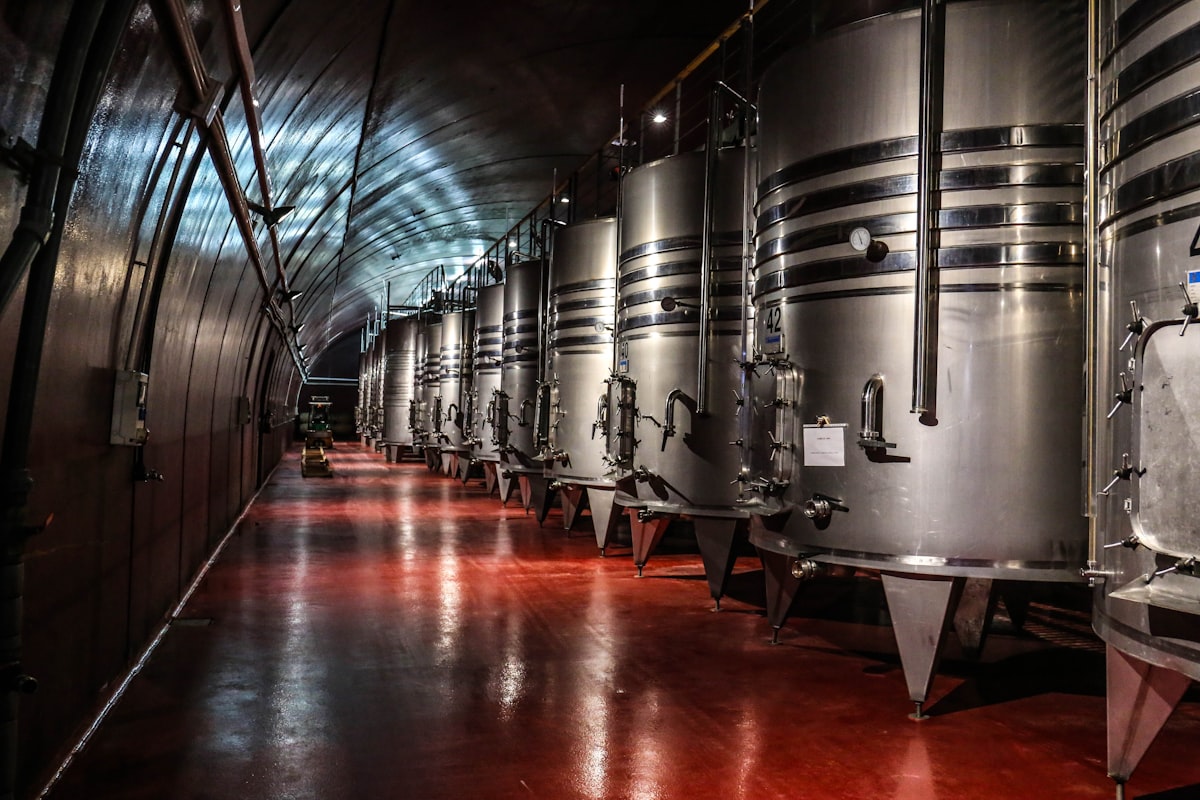
There was a time — not long ago — when a wine cellar was simply a room. A cool, dark space beneath the house where bottles accumulated in wooden racks, organised loosely by region and vintage, visited with a torch and a sense of purpose. The cellar was functional, occasionally romantic, never architectural. That era is over. In the last decade, the private wine cellar has undergone a transformation so complete that it has become, in the most ambitious homes, the single most architecturally significant space in the building — more considered than the kitchen, more expensive than the master suite, more visited than the living room. The wine cellar is no longer where you store wine. It is where you perform your relationship with it.
The Glass Revolution
The catalyst was glass. Specifically, the development of thermally broken, argon-filled glazing systems that could maintain cellar conditions (12–14°C, 65–75% humidity) while allowing full visual transparency. Suddenly, the wine collection — previously hidden underground — could be displayed. Walk-in glass cellars appeared in living rooms, dining rooms, beneath staircases, flanking hallways. The bottle became decorative object; the cellar became vitrine. Firms like Spiral Cellars (UK), Degré 12 (France), and Wine Corner (Switzerland) industrialised the concept, offering modular glass systems that could be integrated into new builds or retrofitted into existing homes, with capacities ranging from 500 to 10,000 bottles.
But the glass cellar, for all its visual impact, was merely the first act. The most sophisticated projects have moved beyond transparency toward something more ambitious: the cellar as spatial experience. Descending into a wine collection is no longer a practical act but a choreographed transition — from the domestic world above into a subterranean environment governed by different rules of light, temperature, sound, and time.
Going Underground: The New Excavations
The most significant wine cellars being built today are literally carved from the earth. In the Swiss Alps, architect Nobert Schwab completed a 15,000-bottle cellar beneath a chalet in Verbier that required excavating 400 cubic metres of granite — a process that took eight months and cost more than the chalet's renovation above ground. The resulting space, lined with the raw granite of the excavation, maintains a natural temperature of 11°C without mechanical cooling. A spiral staircase descends three storeys; at the bottom, a tasting room seats eight around a single slab of the same granite, lit by a single pendant that creates a pool of amber light in the stone darkness. The cellar's value, by the architect's estimate, exceeds €2 million — not including its contents.
In Tuscany, the tradition of cave cellars has been revived and reimagined by a new generation of architect-oenophiles. Studio Motta Arrigoni, working on a private estate near Montalcino, bored horizontally into a hillside to create a 200-metre-long barrel vault that functions simultaneously as wine cellar, art gallery, and subterranean passage connecting the main villa to a guest house. The corridor is lined with travertine recovered from a demolished Roman-era aqueduct, and the lighting — fibre-optic points embedded in the ceiling — mimics a star field. The temperature gradient along the tunnel's length (cooler at the back, warmer near the entrance) creates natural zoning: Burgundy and Champagne at the far end, Barolo and Bordeaux in the middle, fortified wines near the door. The space is, by any measure, architecture of the highest order — yet its primary function remains profoundly domestic: it is where the owner selects a bottle for dinner.
The Technology Layer
Behind the stone and glass, contemporary wine cellars deploy technology that would not be out of place in a commercial wine warehouse. Climate systems by EuroCave, Fondis, or Viessmann maintain temperature to within ±0.5°C and humidity to ±3%, with backup generators ensuring uninterrupted operation during power failures — a non-negotiable when the cellar's contents may be worth €500,000 to €5 million. Inventory management has gone digital: systems like CellarTracker, InVintory, and proprietary RFID solutions allow owners to locate any bottle in a collection of thousands via smartphone, track drinking windows, and receive alerts when a wine reaches optimal maturity.
The most advanced installations incorporate what might be called "environmental dramaturgy." Motion sensors trigger lighting sequences as the owner descends — cool blue for the Champagne section, warm amber for Burgundy, deep red for Bordeaux. Acoustic panels calibrated for small-room acoustics ensure that the tasting room's sonic environment is as controlled as its thermal one. One recent project in Singapore (where subterranean construction is impossible due to the water table) created a suspended cellar — a climate-controlled glass box within a double-height living space — that is lowered hydraulically from the ceiling when the owner wishes to select a bottle, then rises again, silently, into the architecture.
The Tasting Room as Social Theatre
The cellar's evolution has necessarily transformed its social function. The tasting room — once an afterthought, a folding table wedged between racks — has become the cellar's centrepiece and, in many homes, the primary entertaining space. These rooms are designed with the precision of private dining rooms: bespoke tables (often in stone, concrete, or live-edge timber), seating for 8–12, integrated decanters, temperature-controlled serving stations, and display cases for the collection's trophy bottles — the 1945 Mouton, the 1961 La Tâche, the magnum of 2000 Margaux that will never be opened but exists as a monument to patience.
The most successful tasting rooms understand that wine is fundamentally a social ritual. London-based designer Leesa Harris, who has completed over 40 residential wine rooms for UHNW clients, describes her approach: "The worst wine rooms are museums. The best are living rooms that happen to be surrounded by wine. The temperature should be comfortable for people, not just for bottles. The lighting should flatter faces, not just labels. And there should always be food — a cheese station, charcuterie, bread — because wine without food is just drinking." Her most celebrated project, beneath a Georgian townhouse in Mayfair, pairs 3,000 bottles of Burgundy with a kitchen designed specifically for the preparation of the region's traditional accompaniments — gougères, coq au vin, époisses — creating a space where the collection is not merely stored but lived.
The Investment Calculus
A purpose-built wine cellar, at the level described here, represents a capital investment of €200,000 to €3 million — a range that reflects the vast spectrum between a well-executed glass installation and a full subterranean excavation with bespoke finishes. The question of return is complex. Estate agents consistently report that a high-quality wine cellar adds 3–5% to a property's value at resale — a multiplier that, for a €10 million home, translates to €300,000–€500,000, often exceeding the cellar's construction cost. But the calculation is misleading in its simplicity. The cellar's true value lies not in its impact on the property's sale price but in its impact on the property's identity. A house with an exceptional wine cellar is not merely a house with an amenity; it is a house with a narrative, a personality, a point of view. In a market where ultra-luxury properties compete for distinction, that narrative is worth more than any spreadsheet can capture.
There is also the question of the collection itself. Fine wine, as an asset class, has outperformed equities, bonds, and gold over the last 20 years (the Liv-ex Fine Wine 1000 index has delivered annualised returns of approximately 10% since 2004). A cellar designed to optimise storage conditions — stable temperature, appropriate humidity, absence of vibration and light — protects and potentially enhances this investment. The cellar is, in this reading, not a cost centre but an asset guardian: a purpose-built vault for a liquid investment that happens to taste extraordinary when the moment arrives to liquidate it.
What the Cellar Reveals
Ultimately, the transformation of the wine cellar from utility space to architectural centrepiece reveals something about the broader trajectory of ultra-luxury living. The most meaningful spaces in a home are no longer the public ones — the entrance hall, the reception room, the terrace — but the intimate ones: the library, the meditation room, the cellar. These are spaces of private ritual, of curated solitude, of self-knowledge expressed through collection and connoisseurship. The wine cellar, at its best, is all of these things simultaneously: a room where temperature, light, and stone conspire to create an environment in which time itself seems to slow, and where the simple act of choosing a bottle for the evening becomes a moment of genuine contemplation.
The great cellars are not about display. They are about descent — the physical and psychological act of going down, leaving the surface world behind, and entering a space where the only things that matter are what you have collected, what you have learned, and who you choose to share it with. In that sense, the wine cellar may be the most honest room in any house: a space where taste, in every sense of the word, is finally and completely at home.
Published by Maison Latitudes · Part of the Latitudes Media network. Explore more: Monaco · Dubai · Riviera