The Return of the Library: Why Ultra-Luxury Homes Are Reinventing the Private Study
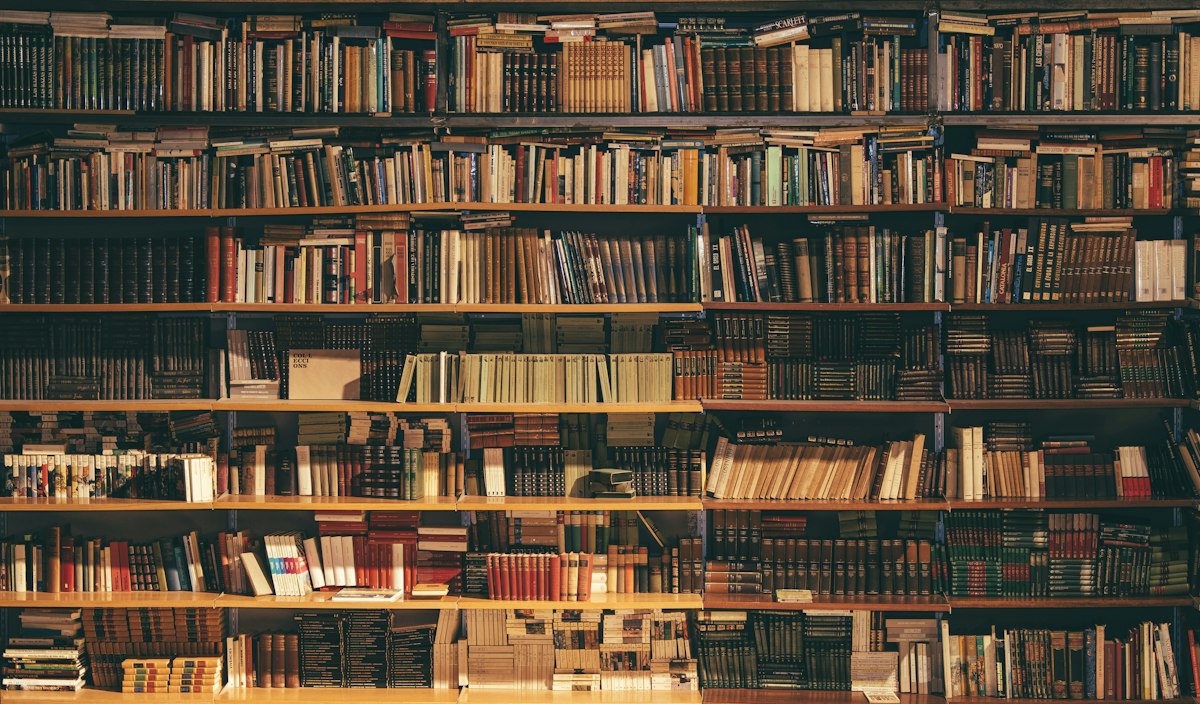
For two decades, luxury residential architecture waged war on the wall. Open plan was the imperative. Sight lines were sacred. Kitchens dissolved into living rooms, living rooms into dining rooms, dining rooms into gardens. The ideal home had the spatial flow of a gallery and the acoustic properties of a train station. Privacy was sacrificed to a single aesthetic principle: openness.
That era is ending. Across the world's most expensive residential projects — from Mayfair townhouses to Bel Air hillside compounds, from Swiss chalets to Singapore penthouses — the private library is returning. Not as nostalgic decoration, not as a Zoom backdrop, but as the most sophisticated room in the house: a space that addresses, with architectural seriousness, the question of how a thinking person lives in the age of infinite distraction.
The Post-Pandemic Recalibration
The pandemic did not create the demand for private studies — it accelerated a correction that was already underway. By 2019, leading architects were already noting client resistance to fully open plans. Families who had spent €10 million on a home discovered that they had nowhere to take a phone call without being overheard, nowhere to read without being interrupted, nowhere to think without a screen competing for attention.
COVID-19 compressed this insight into urgency. Suddenly, every adult in a household needed a private workspace. The kitchen island — that totemic surface of open-plan living — proved inadequate for board meetings. Bedrooms became offices. Closets became recording studios. The spatial poverty of even the most expensive open-plan homes was exposed.
The response, in the highest tier of residential architecture, has been decisive. A 2025 survey by the Knight Frank Global Wealth Report found that 78% of UHNW respondents now rate a "private study or library" as essential — up from 34% in 2018. Among buyers spending above €20 million, the figure rises to 91%.
The New Library: Neither Museum Nor Office
The contemporary luxury library bears little resemblance to the leather-and-mahogany cliché or the glass-and-steel home office. It is a new typology: a room designed for focused intellectual life, integrating physical books, curated art, acoustic engineering and invisible technology into a space that invites sustained concentration.
London-based architect John Pawson — whose work defines the intersection of minimalism and luxury — describes the shift: "The library is the one room where the client consistently asks for less, not more. Less glass. Less technology. Less visual noise. They want a room that is slower than the rest of the house."
The materials palette reflects this philosophy. Natural stone or lime plaster walls (never drywall). Solid timber joinery for bookshelves (walnut, fumed oak, or quarter-sawn white oak). Acoustic fabric panels concealed behind shelf units. Floors of reclaimed parquet or hand-loomed wool carpet. Lighting that eliminates glare and supports reading for hours without fatigue — typically a combination of indirect cove lighting, focused task lamps and natural light controlled by architectural louvres rather than curtains.
The Acoustic Revolution
Perhaps the most significant innovation in luxury library design is acoustic engineering. In open-plan homes, sound travels uncontrolled — conversation, kitchen noise, children, media — creating a persistent low-level stress that most residents habituate to without recognising. The contemporary library inverts this: it is designed as an acoustic sanctuary.
Leading acoustic consultants — Kahle Acoustics, Arup SoundLab, Sandy Brown Associates — are now regularly engaged on residential projects, applying concert-hall and recording-studio principles to private rooms. The techniques include: mass-loaded vinyl barriers within walls; decoupled ceiling systems that float independently of the structural slab; acoustic door seals that eliminate sound transmission through gaps; and HVAC systems redesigned for silence (the typical residential system produces 35-40 dB; a well-engineered library achieves NC-20, quieter than a whisper).
The result is a room where the dominant sound is the turning of a page. For clients who spend their professional lives in noisy environments — trading floors, construction sites, open-plan tech offices — the value of domestic silence is, increasingly, quantifiable and non-negotiable.
The Physical Book as Luxury Object
The library's resurgence is inseparable from a broader cultural reassessment of the physical book. In an era of digital abundance, the curated personal library has acquired the status of a collection — comparable to art, wine or automobiles. A library communicates not just taste but intellectual identity: the books a person chooses to keep, display and revisit reveal something that no digital profile can replicate.
The market for rare and antiquarian books has responded accordingly. Christie's and Sotheby's report sustained growth in book and manuscript sales, with UHNW buyers increasingly commissioning bespoke libraries built around specific themes: first editions of modernist literature, complete runs of architectural journals, historical atlases, or scientific texts related to the buyer's industry.
A new category of professional — the "library curator" or "bibliographic consultant" — has emerged to serve this market. These specialists, typically trained in librarianship or art history, work with architects and clients to develop collections that are intellectually coherent, visually harmonious and investment-grade. A fully curated private library of 3,000 to 5,000 volumes, including significant first editions and fine bindings, represents an investment of €200,000 to €2 million — modest in the context of a €30 million home, but transformative in terms of the room's character and purpose.
Technology: Present but Invisible
The best contemporary libraries integrate technology without allowing it to dominate. The screen — if present at all — is concealed behind a motorised panel or bookshelf section. Speakers are architectural: embedded in ceilings or walls, delivering music at background levels without visible hardware. Lighting is fully automated but manually overridable, with circadian-rhythm programming that shifts colour temperature from energising daylight tones in the morning to warm, low-blue-light spectra in the evening.
Climate control is equally sophisticated. Books require stable humidity (45-55% RH) and temperature (18-22°C). In climates with significant seasonal variation — London, New York, the Alps — maintaining these conditions requires dedicated HVAC zoning, vapour barriers and monitoring systems that alert to deviations before damage occurs. For serious collectors, these systems represent not optional refinement but essential preservation infrastructure.
Five Libraries That Define the Moment
The Kensington Townhouse Library by David Chipperfield Architects: a double-height room in pale oak and white plaster, with a mezzanine gallery accessed by a freestanding spiral stair. The collection focuses on architectural monographs and travel photography. Natural light enters through a restored skylight. The room seats twelve for intimate lectures.
The Engadin Study by Peter Zumthor: a single-storey timber room attached to a Swiss chalet, with views over a pine valley. Shelves of rough-sawn larch hold 2,000 volumes. A wood-burning stove provides supplemental heat. The room has no electricity — reading is by daylight and candle.
The Singapore Tower Library by SCDA Architects: a climate-controlled room on the 50th floor of a residential tower, with floor-to-ceiling glass on one wall (UV-filtered, digitally tinted) and solid concrete on three. The collection spans Asian contemporary art monographs. A daybed faces the Strait of Malacca.
The Napa Vault by Olson Kundig: a subterranean library adjacent to a wine cellar, both carved from volcanic rock. The books — first editions of California literature, from Steinbeck to Didion — share the same temperature and humidity conditions as the wine. A glass partition allows visual connection between the two collections.
The Marrakech Riad Library by Studio KO: a courtyard room with zellige tiles, tadelakt walls and cedarwood shelves housing 4,000 volumes on North African history, art and architecture. The room opens onto a central fountain, providing natural white noise that masks street sounds. Reading chairs are by Pierre Jeanneret, sourced from Chandigarh.
The Investment in Silence
The return of the library is, at its core, an investment in silence — in the possibility of sustained thought, of deep reading, of intellectual life conducted at a human pace. In homes where every other room is optimised for activity, entertainment and social performance, the library offers something radical: a room whose purpose is to slow down.
For architects, the library presents a welcome design challenge. It is the one room where restraint is the client's explicit demand, where material quality matters more than spatial drama, and where the success of the design is measured not in photographs but in hours spent. A well-designed library does not photograph well — it reads well. And that distinction, in an age of architectural spectacle, is itself a form of luxury.
Published by Latitudes Media · More from Maison Latitudes