The Private Wine Cellar: How Oenological Architecture Became Ultra-Luxury Living's Most Tastefully Curated Underground Room
March 28, 2026 · 15 min read
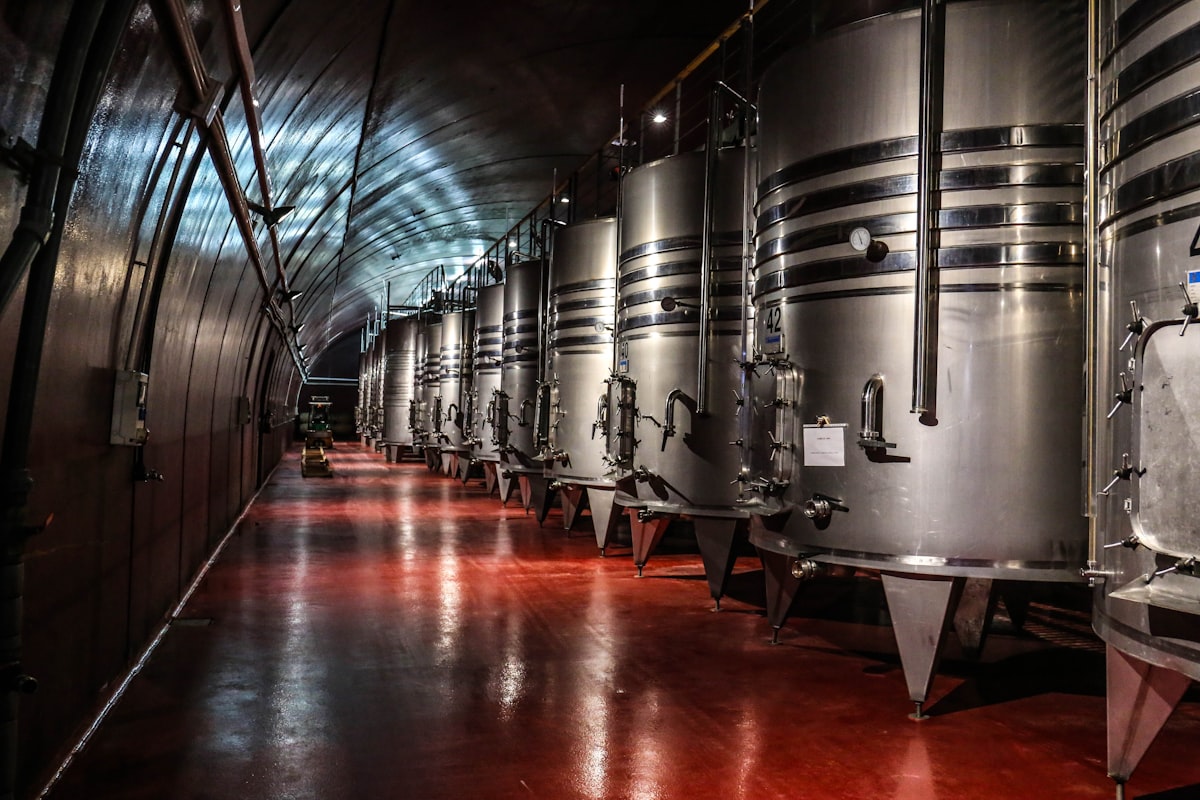
There is a moment, familiar to anyone who has descended into a properly designed private wine cellar, when the temperature shifts, the acoustic quality changes, the light dims to something deliberate, and the world above — its urgencies, its notifications, its unrelenting brightness — simply ceases to be relevant. This moment is not accidental. It is the product of a design discipline that has, over the past two decades, evolved from a branch of climate engineering into one of residential architecture's most sophisticated and emotionally potent specialisations. The private wine cellar, once a pragmatic solution to the problem of keeping bottles at the correct temperature, has become something far more complex: a room that functions simultaneously as storage, gallery, sanctuary, and statement — the architectural equivalent of a library in a digital age, a space whose very existence communicates a particular relationship with time, knowledge, and pleasure.
The Physics of Perfection
Wine storage is, at its core, a problem of thermodynamics, and the solutions that contemporary cellar designers have developed operate at a level of precision that would satisfy a pharmaceutical laboratory. The ideal storage environment — 12-14°C, 65-75% relative humidity, zero UV exposure, minimal vibration, negligible air movement — sounds simple but is fiendishly difficult to maintain in a residential context. Temperature fluctuations of even 2-3°C, repeated over years, accelerate the chemical reactions that transform a great wine into an ordinary one. Humidity too low dries corks; too high encourages mould. Vibration — from traffic, building systems, even the footsteps of residents above — disturbs the sediment in maturing reds and can measurably affect the development of wines stored for decades.
The engineering responses to these challenges have produced a category of specialist firms — Spiral Cellars in the UK, Degré 12 in France, Vinotemp and Vigilant in the US — whose work combines HVAC engineering, structural design, and a detailed understanding of oenological science. A bespoke cellar installation by one of these firms, for a collection of 2,000-5,000 bottles, typically costs between €80,000 and €250,000 — a figure that reflects the complexity of achieving conditions that passive cellaring (a hole in the ground in a temperate climate) once provided for free. The premium is not for temperature control alone; it is for certainty. A modern climate-controlled cellar guarantees, with monitoring systems that alert the owner to deviations measured in fractions of a degree, that the 1982 Pétrus purchased at auction for €6,000 will arrive at the glass in the condition its maker intended.
The Descent as Theatre
The most architecturally ambitious private cellars have recognised that the act of descending to retrieve a bottle is itself a narrative experience — a transition from the domestic everyday to something more ceremonial, more deliberate, more charged with anticipation. The entrance design has consequently become a focus of creative attention that rivals the cellar itself. Glass floors that reveal the collection from above. Spiral staircases that descend through circular shafts of stone or steel. Concealed doors activated by hidden mechanisms — a bookshelf that pivots, a wall panel that slides. The references are deliberate: the hidden passage, the secret room, the vault. Wine cellars borrow the architectural language of treasure chambers because that is, economically speaking, precisely what they are.
A cellar designed by the Bordeaux-based firm L'Atelier du Vin for a private residence in the seventh arrondissement of Paris exemplifies this theatrical approach. Access is through a glass-and-steel spiral staircase that descends three metres below the apartment's living room floor, visible through a circular glass panel set into the parquet. The cellar itself — a cylindrical room seven metres in diameter, lined floor-to-ceiling with temperature-controlled Bordeaux oak racking — holds 3,200 bottles arranged not by region or vintage but by drinking window, so that the owner, having descended the spiral, is presented first with the bottles that are currently at their peak. The design cost €420,000, exclusive of the wine. The architect's observation that "the staircase is the aperitif" captures the philosophy: the physical journey from living room to cellar is understood as the first stage of a tasting experience that begins with the eyes and the body before it involves the palate.
The Tasting Room: Where Collection Becomes Conversation
The evolution of the private wine cellar into a social space — incorporating tasting tables, seating areas, and the kind of atmospheric design that high-end restaurants invest millions in achieving — represents perhaps the most significant shift in residential oenological architecture. The traditional cellar was a utility space: cold, damp, dimly lit, visited briefly and alone. The contemporary cellar is increasingly a destination room — a space where the collection is not merely stored but experienced, discussed, and shared.
Tasting room design borrows freely from the hospitality industry's understanding of how environment affects perception. Lighting is critical: warm, dimmable illumination that allows the visual assessment of colour and clarity without the UV exposure that degrades wine. Acoustics are considered: soft surfaces and deliberate sound absorption create the kind of focused, intimate acoustic environment in which the nuances of flavour and aroma conversation can flourish. Materials are chosen for their olfactory neutrality — no fresh paint, no treated timber, no aromatic stone — because the nose is the primary instrument of wine appreciation, and any competing scent compromises the experience.
The most sophisticated installations include dedicated decanting stations with temperature-controlled water baths for bringing older vintages slowly to serving temperature; Coravin-equipped preservation systems that allow single glasses to be drawn from rare bottles without exposing the remaining wine to oxygen; and integrated catalogue systems — typically iPad-controlled databases that map every bottle's position, provenance, purchase price, professional ratings, and optimal drinking window. The cellar has become, in these installations, a kind of physical database — a three-dimensional catalogue in which every bottle is simultaneously an object, an investment, and a potential experience.
The Collection as Capital
The financial dimension of the private wine cellar has, since 2015, shifted from incidental to intentional. The Liv-ex Fine Wine 1000 index — the industry's benchmark for fine wine as an investment asset — has demonstrated annualised returns of 8-12% over the past decade, outperforming most fixed-income instruments and rivalling equity markets with significantly lower volatility. For the ultra-high-net-worth individual, a well-curated cellar of 3,000-10,000 bottles represents both a consumption asset (wine that will be drunk) and a financial asset (wine that will appreciate) — a dual function that no other residential room can claim.
This financial dimension has spawned a sub-industry of cellar management: specialist advisors who combine sommelier expertise with investment analysis to construct collections that balance drinking pleasure with capital appreciation. The strategy typically involves three tiers: everyday wines (consumed within two to five years, treated as an operating expense); prestige wines (held for five to fifteen years, consumed at their peak, treated as a lifestyle investment); and trophy wines (blue-chip Bordeaux, Burgundy, and increasingly select Italian and California bottlings held for decades as appreciating assets). A well-managed cellar in this model generates both pleasure and returns — a proposition that is, in the context of ultra-luxury residential design, essentially unique.
The Underground Statement
What the private wine cellar communicates about its owner is fundamentally different from what other luxury rooms communicate. A home cinema says: I consume entertainment. A gym says: I invest in my body. A wine cellar says: I invest in time. The act of purchasing wine that will not reach its peak for a decade or two — and of creating the conditions for it to develop optimally over that period — is an act of patience, knowledge, and temporal confidence that is, in the contemporary moment, almost countercultural. In a world organised around immediate gratification and quarterly returns, a cellar full of maturing Barolo and sleeping Grand Cru Burgundy represents a commitment to a timescale that most people, and most markets, no longer recognise.
This is why the private wine cellar has, for a certain category of buyer, become the defining room of the luxury home — the space that most precisely expresses the values that ultra-luxury living, at its best, aspires to represent. Not excess, but curation. Not consumption, but cultivation. Not display, but depth.
The bottle, lying in darkness at 13°C, asks for nothing except time. The cellar's job is to provide it.
In the climate-controlled vaults beneath the world's most refined residences, the private wine cellar has transcended its origins as mere storage to become ultra-luxury living's most eloquent architectural statement — a room that measures wealth not in square metres, but in decades of patience.