The Private Speakeasy: How Cocktail Bar Architecture Became Ultra-Luxury Living's Most Seductively Social Space
April 2026 · 12 min read
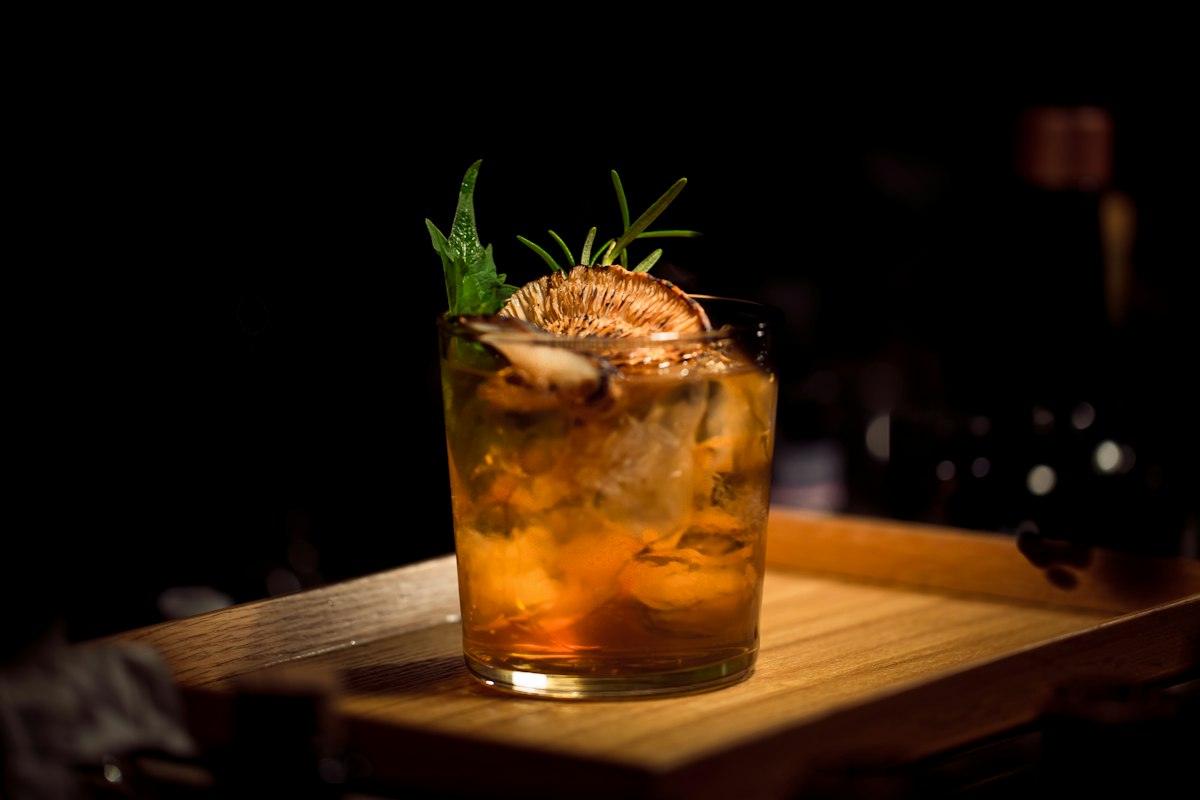
Every great house needs a room that exists outside ordinary time. Not the kitchen, which belongs to morning. Not the bedroom, which belongs to night. But a room that belongs to the threshold between — the hour when conversation deepens, when strangers become confidants, when the day's performance gives way to something more honest. In the landscape of ultra-luxury residential architecture, that room has found its definitive form: the private speakeasy.
The Architecture of Concealment
The speakeasy's power begins with its entrance. In the best residential examples, the bar does not announce itself. A bookcase pivots on hidden hinges. A wall panel slides to reveal a staircase descending below grade. A vintage telephone, lifted from its cradle, triggers a motorised door. The theatricality is deliberate: the act of discovery transforms the guest's psychological state before they have taken their first sip.
David Collins Studio, the London-based practice responsible for some of the world's most celebrated hotel bars (The Connaught Bar, The Blue Bar at The Berkeley), has applied this principle to a private residence in Mayfair where a Georgian drawing room conceals a subterranean cocktail bar accessed through a false fireplace. The descent — twelve steps of black marble, lit by a single brass sconce — compresses the world to a vanishing point before opening into a room of extraordinary intimacy: twenty square metres of burnished walnut, green leather, and a coffered ceiling that absorbs sound like velvet.
The Bar as Altar
The physical bar — the counter, the back bar, the working surface — is the speakeasy's altar, and its design demands the same precision as a professional installation. The finest private bars are built by the same craftsmen who supply London's American Bar at The Savoy or New York's Bemelmans Bar: cabinetmakers who understand that a bar top must be precisely 107 centimetres high, that the foot rail must sit at 23 centimetres, and that the working well must accommodate a Boston shaker, a Hawthorne strainer, a julep strainer, and a jigger within arm's reach.
Materials are paramount. The bar top itself — typically a single slab of marble (Nero Marquina for drama, Calacatta for luminosity) or hand-finished bronze — must resist water rings, citrus acid, and the abrasion of a thousand evenings. Behind it, the back bar presents the collection: spirits arranged not alphabetically but by genealogy, on shelving that is simultaneously functional and theatrical. Integrated LED strips with warm colour temperatures (2200K to 2700K) illuminate bottles from below, transforming a row of aged spirits into a wall of liquid amber.
The Ice Programme
Nothing separates an amateur home bar from a serious speakeasy more decisively than ice. The Japanese tradition of hand-carved ice — practised at bars like Ice Carving Hidetsugu in Tokyo — has been adopted by the most exacting private speakeasy owners, who maintain dedicated freezer drawers producing perfectly clear, directionally frozen blocks.
A Clinebell machine, the industry standard for producing crystal-clear 136-kilogram blocks, occupies the utility space of several private speakeasies in Geneva and Dubai. The blocks are hand-cut to order: a perfect 5.5-centimetre cube for an Old Fashioned, a sphere for a Negroni, a diamond for a Martini. At this level, ice is not a cooling agent. It is a design element, a temporal marker, a meditation on impermanence dissolved in whisky.
The Sound Design
The acoustic character of a speakeasy is as critical as its visual design. The room must be intimate without being claustrophobic, lively without being loud, and capable of sustaining conversation at a whisper. Acoustic engineers specify a reverberation time of 0.4 to 0.6 seconds — significantly shorter than a living room (0.8 to 1.2 seconds) — achieved through a combination of upholstered surfaces, acoustic plaster ceilings, and heavy curtains.
Music delivery is typically through concealed speakers (Steinway Lyngdorf, Devialet Phantom) integrated into walls or ceiling cavities, with a dedicated zone on the whole-house audio system. The playlist — curated by services like Sonos Radio or bespoke consultancies like London's Music Concierge — defaults to jazz (Bill Evans, Chet Baker, the Ahmad Jamal Trio at the Pershing) but the system accommodates everything from bossa nova to late-night electronic at the turn of a dial.
The Spirits Library
The private speakeasy's spirits collection operates on a different logic from a commercial bar. There is no obligation to stock everything. Instead, the collection reflects the owner's palate, travels, and relationships: a bottle of Yamazaki 25 acquired in Kyoto, a cask-strength Springbank from a distillery visit, a vintage Chartreuse discovered in a Parisian cave.
Storage becomes architecture. Temperature-controlled cabinets (16°C for spirits, 5°C for vermouth and citrus) are integrated into the back bar. Rare bottles — those valued above €5,000 — are displayed in individually lit niches with UV-protective glass. A dedicated cocktail library (David Wondrich's Imbibe!, the Savoy Cocktail Book, Jerry Thomas's Bar-Tender's Guide) occupies a shelf within reach of the bar, because the finest cocktails are not improvised but researched.
The Social Geometry
The most sophisticated private speakeasies accommodate exactly eight people: four at the bar (the most socially charged position, facing the bartender and each other), and four in a banquette arrangement that encourages the kind of lateral conversation that larger rooms disperse. This is not accidental. Research in environmental psychology confirms that groups of six to eight produce the richest conversational dynamics — large enough for multiple threads, small enough for everyone to participate.
The banquette — typically a continuous upholstered seat in leather or mohair velvet, curved to encourage intimacy — faces the bar, creating a theatrical relationship between the person mixing and the person drinking. A low cocktail table (45 centimetres, significantly lower than a dining table) forces guests to lean forward, deepening engagement. The lighting — never overhead, always from the side or below — eliminates harsh shadows and flatters every face in the room.
The Investment Case
A fully specified private speakeasy — designed by a specialist practice, built with professional-grade equipment, and stocked with a curated spirits collection — represents an investment of €150,000 to €500,000. At the upper end, this includes a Clinebell ice machine (€8,000), a custom bar (€40,000 to €80,000), acoustic treatment (€20,000), integrated audio (€15,000 to €40,000), and a founding spirits collection (€30,000 to €100,000).
In terms of return, the private speakeasy consistently ranks among the highest-impact amenities in luxury real estate valuations — above wine cellars, below swimming pools, and far above home cinemas in terms of perceived exclusivity. For the owner, the return is more immediate: it is the room where every evening ends, where the best conversations happen, and where the boundary between home and the world dissolves most completely.
Maison Latitudes explores the architecture, design and philosophy of the world's most exceptional private residences. Discover more →