The Private Orangery: How the Aristocratic Citrus House Became Ultra-Luxury Living's Most Botanically Refined Entertaining Space
March 22, 2026 · 10 min read
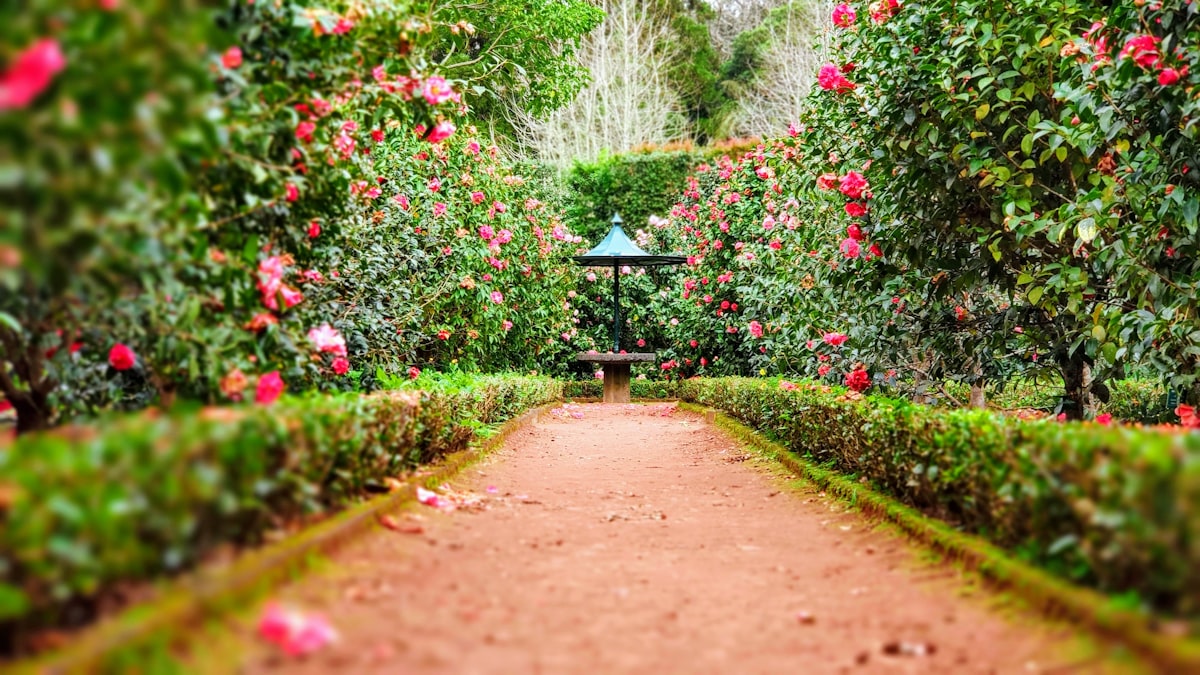
The conservatory is glass. The greenhouse is functional. The orangery is something else entirely — a building type that originated in the Renaissance courts of Italy, evolved through the grand estates of France, England, and the Netherlands, and has now re-emerged, after a century of architectural neglect, as the most culturally resonant addition that a contemporary luxury residence can possess. The orangery is not merely a room with plants. It is a statement about the relationship between cultivation and civilisation, between interior space and the natural world, between the controlled warmth of human ingenuity and the seasonal realities of northern climates. It is, in the fullest sense, a room for living among growing things — and it is the space that the most sophisticated residential architects of the 2020s are designing with the greatest care and the least compromise.
The distinction between an orangery and a conservatory is not pedantic; it is structural. A conservatory is primarily glass — a transparent enclosure that maximises light at the expense of thermal mass. An orangery is primarily masonry — a solid building with large south-facing windows, often arched, that admits light selectively while retaining heat through the thermal mass of its stone or brick walls. The conservatory is an ephemeral structure, light and often temporary in character. The orangery is permanent architecture, designed to age, to patinate, to become more beautiful as its stonework weathers and its citrus trees mature. This permanence is the quality that distinguishes the contemporary orangery from every other garden building: it is not an accessory to the house but an extension of its architectural language, built from the same materials and with the same ambition.
The Medici Origins
The first orangeries were Italian and purely practical. Citrus cultivation north of Naples required winter protection, and the Medici — whose botanical ambitions paralleled their political ones — built the first purpose-designed citrus houses at their villas outside Florence in the fifteenth century. The Giardino di Boboli's limonaia, dating to the 1550s, established the architectural template: a south-facing stone building with tall arched openings that could be closed with wooden shutters or canvas screens during the coldest months. The trees were planted in terracotta vessels — the Medici impruneta pots that remain the standard for serious citrus cultivation — and wheeled outdoors in spring, creating a seasonal choreography of movement between interior and exterior that became one of the defining rituals of Italian garden culture.
From Florence, the orangery migrated north. Louis XIV's Orangerie at Versailles, completed by Jules Hardouin-Mansart in 1686, elevated the building type from horticultural structure to architectural monument. Its three vaulted galleries, extending 155 metres beneath the Parterre du Midi, housed over 1,000 orange trees in silver tubs and served simultaneously as a winter garden, a promenading space, and a theatre for court entertainments. The message was unambiguous: the Sun King could command even the seasons. Citrus — Mediterranean, fragrant, fruiting in winter — bloomed in the Île-de-France because the King willed it. The orangery was not about horticulture. It was about power.
The English Refinement
England's contribution to the orangery tradition was characteristically pragmatic. The country houses of the eighteenth and nineteenth centuries adopted the building type not as a statement of royal authority but as a civilised amenity — a space in which to take tea, read, entertain guests, and enjoy the presence of exotic plants during the long grey months between October and April. The architects of the English orangery — from Capability Brown to Humphry Repton to the great Victorian practice of Messenger & Company — developed a distinctive vocabulary: Palladian proportions, ashlar stone, sash windows reaching from floor to cornice, underfloor heating via hypocaust or steam pipe, and an interior atmosphere maintained at the precise temperature required by citrus cultivation — 5-12°C in winter, never above 25°C in summer.
The English orangery was also, crucially, a social space. Unlike the French model, which served ceremonial purposes at court scale, the English orangery was designed for the domestic rituals of the country house. Breakfast in winter sunshine. Afternoon tea among the lemon trees. Evening drinks as the low sun angled through the south-facing windows and gilded the limestone floor. The plants were not decorative props but co-inhabitants — living presences whose seasonal rhythms, flowering cycles, and fruiting schedules structured the experience of the room as decisively as the architecture itself.
The Contemporary Revival
The contemporary private orangery bears the same relationship to its historical antecedents as a bespoke watch bears to its eighteenth-century predecessors: the fundamental purpose is unchanged, but the technology, materials, and level of refinement have advanced exponentially. Today's orangery architects work with structural glass that can span six metres without mullions, limestone blocks cut to tolerances measured in fractions of a millimetre, underfloor heating systems calibrated to maintain different temperature zones within the same room, and automated ventilation that responds to humidity, temperature, and CO₂ levels in real time.
The result is a space that the Medici would recognise in principle and marvel at in execution. A contemporary orangery at a Cotswolds estate, designed by a leading British practice in 2024, illustrates the genre: 120 square metres of Clipsham stone and structural glass, oriented due south, with a polished limestone floor incorporating underfloor heating zones — warmer beneath the seating areas, cooler beneath the planted beds where 12 mature citrus trees grow in custom Impruneta terracotta vessels. The roof is a hybrid of solid insulated panels and triple-glazed glass, with automated louvres that adjust to solar gain throughout the day. The climate control system maintains 18-22°C year-round in the entertaining zone and 8-14°C in the citrus zone, separated by a gentle step in floor level rather than a physical barrier.
The cost of this level of integration — architecture, horticulture, climate engineering, and the ongoing maintenance required by mature citrus trees — typically ranges from £800,000 to £2.5 million, depending on scale, materials, and the complexity of the planting scheme. This is not a conservatory budget. It is the investment required to create a room that will improve over decades as the stonework patinates, the trees mature, and the space acquires the lived-in quality that no amount of design can accelerate.
The Botanical Programme
A private orangery lives or dies by its planting. The citrus collection is the centrepiece — typically a combination of Citrus × sinensis (sweet orange), Citrus × limon (lemon), Citrus reticulata (mandarin), and the more exotic Citrus medica (citron), whose gnarled form and intense fragrance have made it a favourite of the contemporary orangery designer. Mature specimens — 20-30 years old, 2-3 metres tall, with established fruiting patterns — are sourced from specialist nurseries in Sicily, Liguria, and the Algarve, and can cost €5,000-€15,000 per tree. The investment is justified by the immediate effect: a newly completed orangery planted with mature citrus trees possesses a temporal depth — a sense of having existed for longer than it has — that is impossible to achieve with young stock.
Beyond citrus, the contemporary orangery planting palette extends to jasmine (Jasminum polyanthum for its winter fragrance), Plumbago auriculata for its blue-flowering habit, Bougainvillea (trained against the masonry walls), and, in the most ambitious schemes, olive trees — small-canopy specimens of Olea europaea whose silver foliage and gnarled trunks provide the architectural contrast to the citrus collection's evergreen regularity. The planting is not random; it is choreographed to deliver fragrance, colour, and visual interest throughout the year, with the citrus blossom of late winter — an intensely sweet, almost narcotic perfume — serving as the climactic seasonal event.
The Room That Breathes
The private orangery's contemporary appeal is inseparable from a broader cultural recalibration of what luxury means in domestic space. The last two decades of residential design were dominated by the open-plan kitchen, the cinema room, the gym, the wine cellar — spaces defined by equipment and technology. The orangery represents a counter-movement: a space defined by biology, by growth, by the slow rhythms of cultivation and the sensory richness of living among plants. It is not a smart room; it is a wise room — a space that asks its inhabitants to slow down, to notice the season, to attend to the flowering of a lemon tree that has been producing fruit since before they were born.
This quality — call it horticultural mindfulness, or simply the pleasure of breakfast among orange trees — is what the luxury market's most sophisticated clients are seeking when they commission an orangery. They are not adding a room to their house. They are adding a relationship: with citrus trees that will outlive them, with seasonal rhythms that predate electric lighting, and with an architectural tradition that connects their Sunday morning to the Medici courts of fifteenth-century Florence. The orangery is, in the end, a room about time — about the long, patient, fragrant unfolding of a life lived among growing things, in a building designed to be beautiful for centuries.
Published by Latitudes Media · More from Maison Latitudes →