The Private Wine Cellar: How Oenological Architecture Became Ultra-Luxury Living's Most Culturally Sophisticated Room
March 31, 2026 · 14 min read
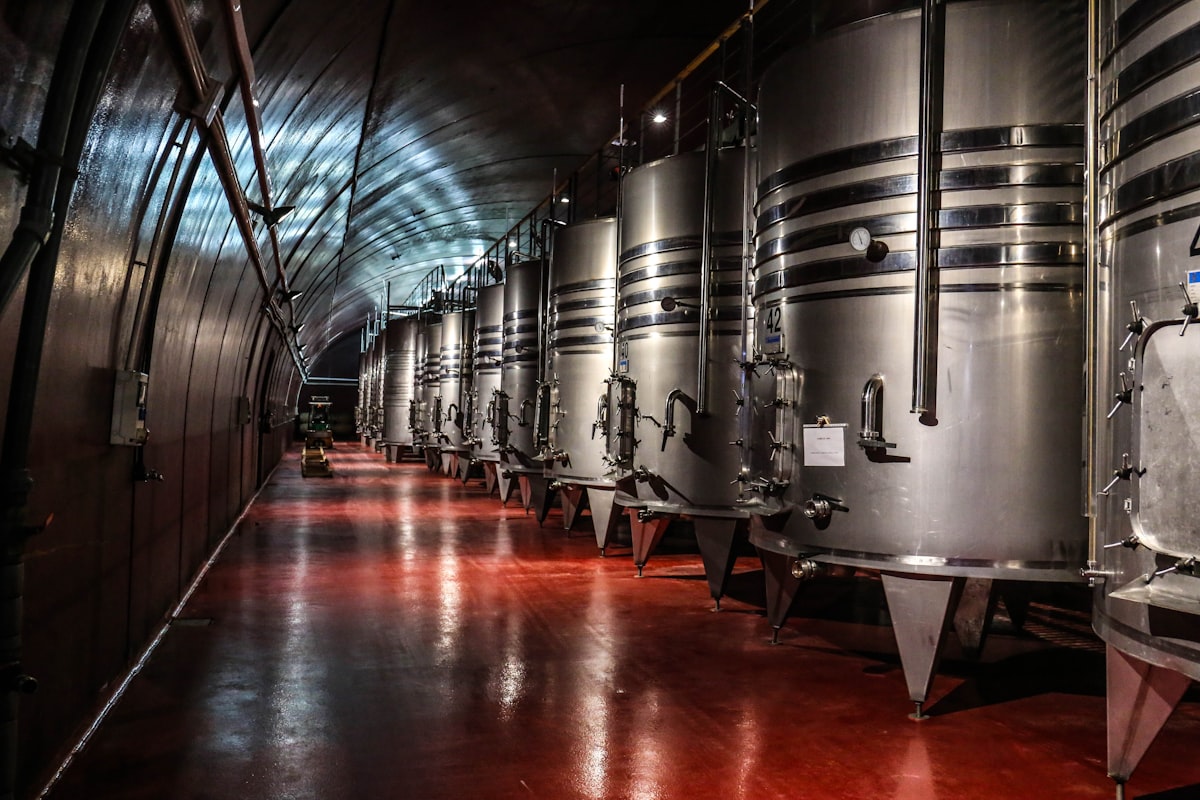
There is a moment, descending the spiral staircase of a properly conceived private wine cellar, when the temperature drops exactly four degrees, the ambient noise of the house above disappears entirely, and the air acquires a mineral quality — part limestone, part oak, part the accumulated exhalations of a thousand sleeping bottles — that no fragrance house has ever managed to synthesise. This is the moment when architecture becomes atmosphere, when a room stops being a storage solution and starts being a sanctuary. The private wine cellar, in the hands of architects who understand its true function, has become the most culturally layered room in ultra-luxury residential design.
Beyond Storage: The Philosophical Cellar
The transformation of the wine cellar from utilitarian storage space to architectural statement has been driven by a fundamental shift in what wine represents within the ultra-luxury ecosystem. For previous generations of collectors, wine was an asset class — bought by the case on allocation, stored in bonded warehouses, traded on the secondary market, and consumed primarily as a social currency. The cellar, if it existed at all within the home, was a temperature-controlled cupboard in the basement, visited briefly and without ceremony.
The contemporary private cellar embodies a radically different philosophy. Wine has become, for a certain tier of collector, a medium through which one engages with history, geography, agriculture, and craft simultaneously. A bottle of 1961 Latour is not merely a beverage; it is a time capsule containing the soil of Pauillac, the weather of a particular growing season, the decisions of a particular cellar master, and the accumulated patience of sixty-five years of proper storage. The room that houses such objects must honour their complexity. It must be, in effect, a museum whose exhibits are alive and evolving.
The Climate Engineering Revolution
The technical requirements of serious wine storage — temperature stability between 12-14°C, humidity maintained at 65-75%, complete absence of vibration, protection from light and odour contamination — have catalysed engineering solutions of extraordinary sophistication. The most advanced private cellars now employ dual-redundant cooling systems with independent backup generators, humidity management calibrated to within 2% tolerance, seismic isolation platforms borrowed from museum conservation technology, and air filtration systems that maintain a positive-pressure environment cleaner than a hospital operating theatre.
These systems are invisible by design. The engineering challenge is to create conditions of absolute environmental stability while maintaining the illusion of timelessness — as though the cellar's perfect climate were a natural consequence of its stone walls and earth-sheltered position rather than the product of half a million euros' worth of mechanical infrastructure concealed behind period-appropriate surfaces. The best cellars achieve this deception so completely that visitors genuinely believe they are standing in a medieval vault rather than a precision-engineered climate capsule.
The Material Palette
Stone — specifically limestone, tufa, and reclaimed cellar stone sourced from decommissioned European wine estates — remains the defining material of the serious private cellar. Its appeal is not merely aesthetic; limestone is hygroscopic, naturally regulating humidity by absorbing and releasing moisture as conditions fluctuate, and its thermal mass provides passive temperature buffering that complements mechanical systems. The best cellar architects source their stone with the same care that winemakers select their oak: specific quarries are chosen for specific projects, and the provenance of the material becomes part of the cellar's narrative.
Oak — French, American, and increasingly Hungarian — provides the secondary material vocabulary. Racking systems carved from solid oak staves, tasting tables fashioned from retired barrique heads, and ceiling beams salvaged from centuries-old chais create a material continuity between the cellar's architecture and its contents. The scent of aged oak mingles with the cool mineral air to produce an olfactory environment of startling evocative power — one that triggers, in the initiated, an almost Pavlovian anticipation of the wines within.
The Tasting Room as Theatre
The integration of formal tasting spaces within private cellars has created a new architectural typology: the domestic theatre of wine. These rooms — typically accommodating eight to twelve guests around a single table of extraordinary craftsmanship — are designed with the acoustic, lighting, and atmospheric precision of a concert hall. Lighting is calibrated to the colour temperature of candlelight (2200K), providing the warm illumination under which wine's colour is most accurately perceived. Acoustic treatment eliminates the hard reflections that stone naturally produces, creating an intimacy of sound that encourages conversation at speaking volume. Ventilation is engineered to clear residual aromas between courses without creating perceptible air movement that might disturb the wine in the glass.
The finest tasting rooms are exercises in controlled sensory focus. There is nothing to look at except the people around the table and the wine in the glass. The walls are bare or minimally adorned. The table is the room's single furniture piece, and its surface — slate, marble, or dark wood — is chosen specifically for the contrast it provides against the ruby of a young Burgundy or the amber edge of an aged Sauternes. Everything that might distract from the wine has been eliminated with surgical precision. What remains is a space of extraordinary concentration — a room designed for the single purpose of paying attention.
The Glass Cellar: Transparency as Statement
A counter-movement to the traditional subterranean cellar has emerged in contemporary luxury residential design: the glass-walled wine room positioned prominently within the home's primary living spaces. These installations — often cylindrical towers rising through double-height spaces, or floor-to-ceiling vitrines flanking dining rooms — treat the wine collection as visual art, transforming hundreds of bottles into a living installation that changes character with the light and the season.
The technical challenges are formidable. Glass is an inherently poor insulator, and the UV transmission of standard glazing is catastrophic for wine storage. Solutions include triple-pane argon-filled assemblies with ceramic frit UV blocking, achieving thermal and optical specifications that would have been impossible a decade ago. The visual effect, when executed correctly, is mesmerising: bottles float in a climate-controlled atmosphere of perfect stillness, their labels visible through glass of absolute clarity, while the life of the house continues around them. The collection becomes simultaneously accessible and untouchable — present but protected, visible but venerated.
The Cellar as Legacy
Perhaps the most compelling aspect of the private wine cellar's evolution is its relationship with time. Unlike virtually every other room in a luxury home — which depreciates, requires renovation, and eventually falls out of fashion — a well-managed wine cellar appreciates. Its contents, if properly selected and stored, grow in value, complexity, and emotional resonance with each passing year. The bottle of Romanée-Conti that a father purchases on the birth of his daughter will be worth ten times its acquisition price and possess a narrative significance beyond any monetary calculation when it is opened on her wedding day.
This temporal dimension transforms the cellar from a room into a legacy project. The decisions made today — which vintages to acquire, which producers to follow, which formats to store — will resonate for decades. The cellar becomes a tangible expression of its owner's taste, patience, and faith in the future. In an era of instant gratification and disposable luxury, the private wine cellar stands as a monument to the radical proposition that some pleasures improve with waiting, and that the finest things in life are those that cannot be hurried.
Part of the Maison Latitudes collection exploring ultra-luxury residential architecture. Discover more at Latitudes Media.