The Private Horological Cabinet: How Watchmaking Architecture Became Ultra-Luxury Living's Most Precisely Crafted Contemplative Space
April 1, 2026 · 14 min read
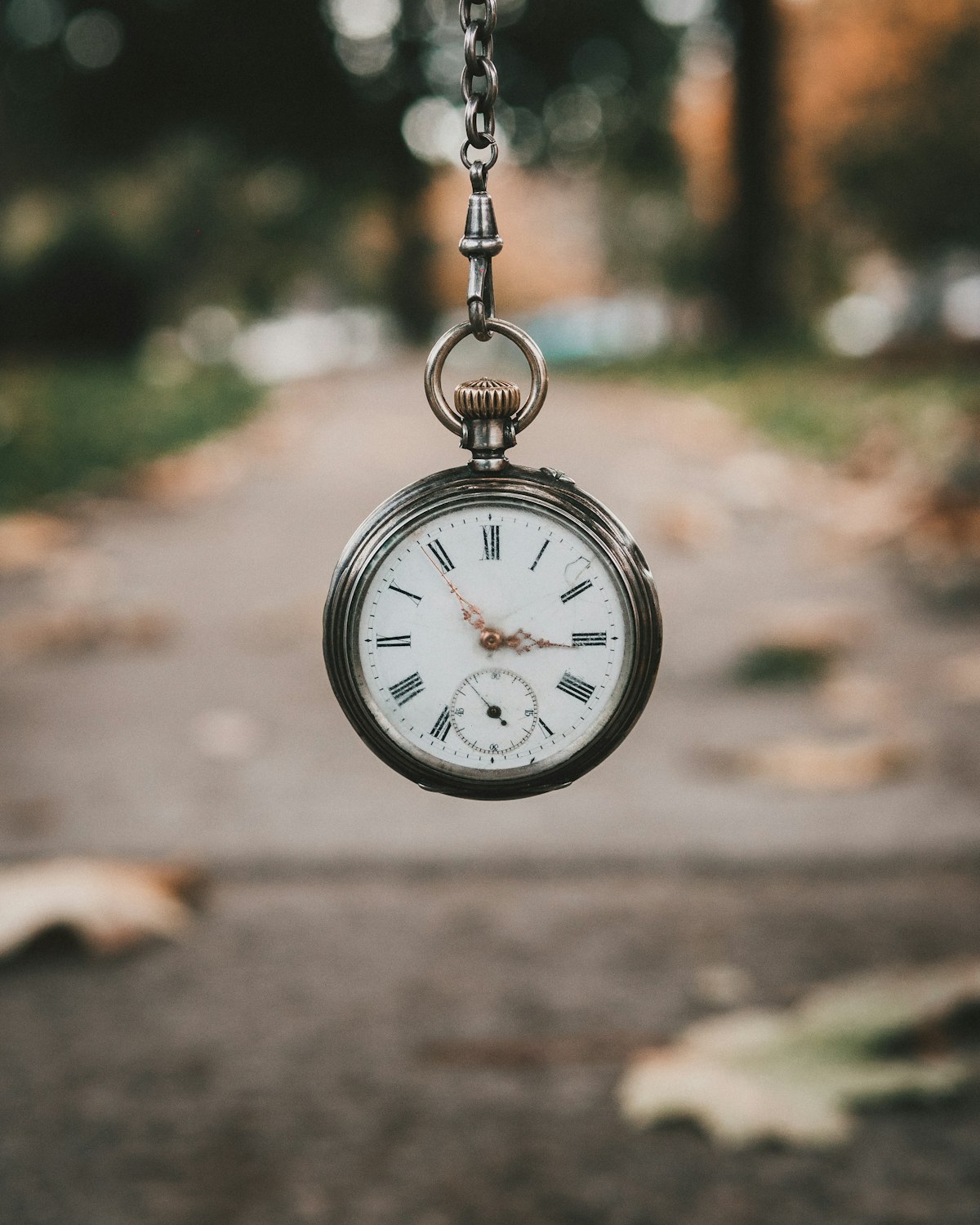
In a limestone villa overlooking Lake Geneva, behind a door of book-matched walnut that opens onto what appears to be a gentleman's study, there is a room whose purpose reveals itself slowly. The lighting — calibrated to 4000 Kelvin, the colour temperature that watchmakers call "workshop white" — is too precise for casual reading. The humidity, maintained at exactly 50 percent by a system invisible behind the panelling, is too controlled for comfort alone. The twelve drawers lining the far wall, each faced with suede and fitted with individual watch cushions machined from surgical-grade silicone, are too specialised for any collection other than the one they were designed to house. This is a private horological cabinet — a room built for the single purpose of containing, displaying and contemplating a collection of mechanical timepieces — and it represents one of the most quietly sophisticated developments in contemporary residential architecture.
The Evolution from Safe to Sanctuary
The private horological cabinet is not a safe room, although it typically incorporates security features that would satisfy a jeweller. It is not a display case, although the presentation of the watches is a central design consideration. It is, in its most fully realised form, a dedicated architectural environment in which the collector's relationship with mechanical horology — a relationship that is simultaneously aesthetic, intellectual, tactile and emotional — can find its fullest expression. The evolution from the traditional safe (a steel box in a closet) to the contemporary horological cabinet (a purpose-built room with bespoke environmental controls, specialised lighting, integrated workbench and curated acoustic properties) mirrors the broader transformation of luxury collecting from possession to experience.
The catalyst was the explosion of watch collecting that began in the late 2010s and accelerated dramatically through the early 2020s. As collections grew — from five watches to fifty, from a hobby to a serious pursuit with six- and seven-figure inventory values — the inadequacy of conventional storage became apparent. A Patek Philippe Grandmaster Chime requires different storage conditions than a vintage Rolex Submariner: the former's enamel dial is sensitive to UV exposure, while the latter's tritium luminous material degrades when stored in complete darkness. A tourbillon watch that sits unworn in a safe for months will lose its chronometric accuracy as lubricants settle; a minute repeater that is never struck will develop stiffness in its hammer springs. The horological cabinet emerged as the answer to these technical requirements — and then, inevitably, transcended them.
The Architecture of Precision
The design of a serious horological cabinet begins with environmental control. Temperature is maintained between 18°C and 22°C — the range in which mechanical watch lubricants perform optimally — with fluctuations limited to ±1°C per hour to prevent the thermal expansion and contraction of metal components that can affect accuracy. Humidity is held at 45-55 percent relative humidity, a range that protects leather straps from desiccation while preventing the condensation that can damage movement finishing. Lighting is multilayered: ambient illumination at 4000K for general viewing, with adjustable spotlights at each display position allowing the collector to examine individual pieces under conditions that reveal the quality of finishing — the depth of a Geneva stripe, the sharpness of an anglage, the mirror polish of a black-polished screw — with a clarity that even the best watchmaking boutique cannot match.
The acoustic dimension is perhaps the most unexpected. A room containing forty or fifty mechanical watches produces a subtle but distinctive soundscape — the overlapping ticking of movements running at different frequencies (21,600 vibrations per hour for a traditional calibre, 28,800 for a high-frequency movement, 36,000 for certain Zenith and Seiko designs) creates a complex polyrhythm that collectors describe, without embarrassment, as meditative. The best horological cabinets are acoustically tuned to enhance this effect: soft materials absorb extraneous noise while hard surfaces at calculated positions reflect and amplify the mechanical sounds, creating an experience of immersion in the machinery of time that has no parallel in domestic architecture.
The Workbench
The integrated watchmaker's workbench is the feature that distinguishes a horological cabinet from a mere display room. Serious collectors — and the distinction between a serious collector and a mere accumulator often hinges precisely on this point — maintain their own watches to varying degrees, from the simple operations of strap changing and minor adjustments to the full servicing of movements. The workbench in a private cabinet is not a professional watchmaker's workshop; it is a curated space where the collector can engage with the mechanical reality of their timepieces at a level of intimacy that wearing alone cannot provide.
The specification of these workbenches reveals the obsessive precision that characterises the horological cabinet as a typology. The work surface is typically of anti-static laminate or tempered glass, slightly recessed within a surrounding lip to prevent small components from rolling off the edge. A stereo microscope — typically a Leica or Meiji unit at 10-40x magnification — is permanently mounted at the primary working position. Drawer organisers contain the standard watchmaker's toolkit: Bergeon screwdrivers with calibrated torque settings, Dumont tweezers in grades 1 through 7, a hand-setting press, a case-back wrench set, pegwood sticks for cleaning jewel bearings, and the tiny oiling cups and lubricants — Moebius 9010 for barrel arbors, HP 1300 for pallet stones — whose correct application is the difference between a movement running at chronometric accuracy and one that fails to meet its specification.
The Display Philosophy
The arrangement of watches within a horological cabinet is never random. Collections are typically organised according to one of several curatorial logics: chronological (the evolution of a particular manufacture's design language over decades), typological (dress watches, dive watches, chronographs, complications each occupying a defined zone), or thematic (a collector whose focus is enamel dials, for instance, might organise by technique — champlevé, cloisonné, grand feu, miniature painting — creating a visual survey that reads like a chapter in the history of decorative arts). The most sophisticated cabinets incorporate rotation systems — motorised display platforms that slowly turn each watch through 360 degrees, allowing the collector to observe the play of light across a dial's surface without touching the glass.
The winder integration is a particular challenge. A watch winder — the motorised device that keeps an automatic watch running when not worn — is a functional necessity for any collection of more than five or six automatic pieces, but the aesthetic of most commercial winders (gleaming lacquer, LED lighting, visible rotors) is antithetical to the restrained luxury that characterises the best cabinets. The solution, increasingly, is concealment: winders are built into the cabinetry itself, their motors isolated from the display surfaces by vibration-dampening mounts, their rotation schedules programmed to match the specific requirements of each movement (a Rolex calibre 3235, with its 70-hour power reserve, requires different winding parameters than a Jaeger-LeCoultre calibre 899, with its 38-hour reserve).
Time as Architecture
What the private horological cabinet ultimately represents is something that transcends its function as a storage facility, display environment or workshop. It is, in its most ambitious realisations, an architectural meditation on the nature of time itself. The room contains objects whose sole purpose is to measure time's passage with maximum precision; the room itself is designed to suspend that passage, to create a space where the rhythms of daily life — schedules, appointments, the tyranny of the clock — give way to a different temporal register: the contemplative time of close looking, of mechanical appreciation, of the recognition that a hand-finished movement is not merely a timekeeping instrument but a philosophical object, an argument in steel and ruby that the world is fundamentally knowable, that complexity yields to patience, that beauty and precision are not opposed but identical.
The cost of a fully specified horological cabinet, excluding the watches, typically ranges from €80,000 to €300,000 — a figure that seems less extravagant when considered as a proportion of the collection it houses (serious collections regularly exceed seven figures) or when compared to the cost of purpose-built environments for other collecting categories (a temperature-controlled wine cellar, a humidity-regulated cigar humidor, a gallery-grade art storage facility). In the economy of ultra-luxury living, where the question is never "Can I afford it?" but "Does it deserve a room?", the answer for mechanical horology has become unequivocal: the most precisely engineered objects in domestic life deserve the most precisely engineered room in the house.