The Private Hammam: How Ottoman Bathing Architecture Became Ultra-Luxury Living's Most Sensually Refined Wellness Space
March 22, 2026 · 15 min read
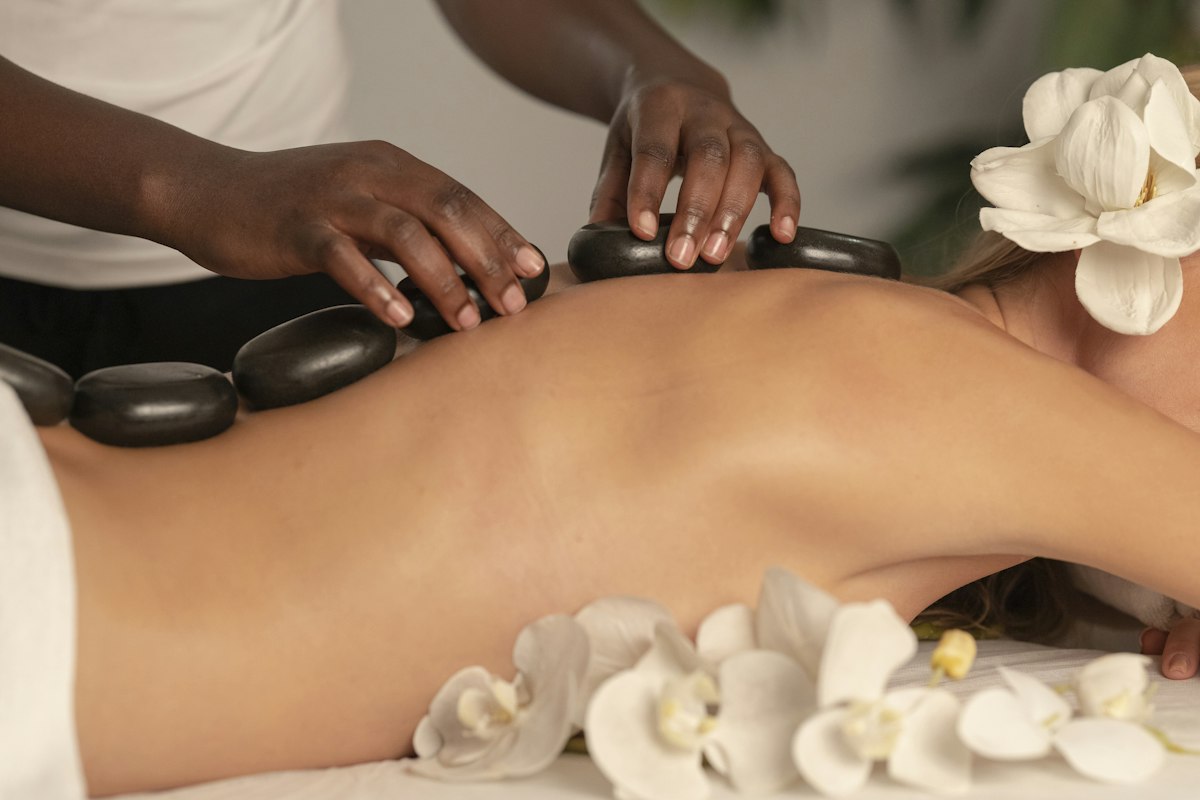
In the hierarchy of residential wellness spaces — the infinity pools, the Nordic saunas, the cryotherapy chambers, the flotation tanks that populate the basements and garden pavilions of contemporary ultra-luxury — one typology stands apart in its combination of historical depth, architectural ambition, and sensory completeness. The hammam — the Ottoman-Islamic bathing tradition that evolved from the thermae of Roman antiquity into one of the most sophisticated wellness architectures ever devised — has, over the past decade, migrated from the public realm into the private residence, where it is being reimagined by architects and wellness designers as the defining statement of a new luxury paradigm: one that measures wealth not in square footage or finish specification but in the quality of daily ritual.
Fifteen Centuries of Steam and Stone
The hammam's architectural lineage is among the longest and most distinguished in the history of building. When Ottoman architects adopted and adapted the Roman bathing tradition in the fourteenth century, they inherited a spatial programme that had been refined over a millennium: the sequential progression from cold room (frigidarium/soğukluk) through warm room (tepidarium/ılıklık) to hot room (caldarium/sıcaklık), followed by the return journey — a choreographed thermal experience designed to cleanse, relax, and restore through the systematic manipulation of temperature, humidity, and physical contact with heated stone.
What the Ottomans added was transcendence. Mimar Sinan, the imperial architect whose works define the golden age of Ottoman architecture, designed hammams — the Haseki Hürrem Sultan Hammam in Istanbul (1556), the Çemberlitaş Hammam (1584) — that elevated bathing from hygiene to cosmology. The domed ceiling of a Sinan hammam, pierced with hundreds of small glass oculi that admit shafts of light through the steam, creates an interior atmosphere that oscillates between the celestial and the subterranean, the spiritual and the corporeal. The göbek taşı — the central heated marble platform where the bather lies prone to receive the vigorous kese (exfoliation) and the languid foam massage — is not merely functional furniture but the gravitational centre of a spatial universe designed to dissolve the boundary between body and architecture.
The Migration to Private Space
The private hammam is not, strictly speaking, a twenty-first-century invention. Ottoman palaces and significant residences incorporated private bathing suites as a matter of course — Topkapı Palace alone contains multiple hammams of extraordinary refinement, and the tradition extended throughout the Ottoman world, from Cairo to Budapest. What is new is the application of hammam architecture to the contemporary Western ultra-luxury residence, where it is being designed not as a simulacrum of a Turkish bath but as a hybrid that draws on the full depth of the tradition while incorporating contemporary wellness science, materials technology, and architectural ambition.
The catalyst for this migration has been the wellness revolution's maturation beyond the merely technical. The first generation of residential wellness spaces — the home gyms of the 1990s, the spa bathrooms of the 2000s, the biohacking suites of the 2010s — were essentially equipment rooms: spaces defined by their machines and their measurable outputs (calories burned, heart-rate variability, cryogenic exposure time). The hammam represents a fundamentally different proposition: a wellness architecture that prioritises sensation, ritual, and communal intimacy over metrics and performance. In a market increasingly saturated with technology-driven wellness solutions, the hammam's ancient, low-tech, profoundly human approach to bodily restoration has become its most compelling differentiator.
The Architecture of Heat
Designing a private hammam demands a technical and material vocabulary that few residential architects possess. The engineering requirements are formidable: a properly functioning hammam requires underfloor and wall heating systems capable of maintaining consistent temperatures between 40°C and 50°C in the hot room; a steam generation system that produces the specific quality of steam — dense, enveloping, non-scalding — that distinguishes a hammam from a conventional steam room; drainage engineering that handles the substantial water volumes involved in traditional bathing; and ventilation systems sophisticated enough to prevent moisture migration into adjacent residential spaces while maintaining the atmospheric density that is essential to the hammam experience.
The material palette is equally demanding. The göbek taşı — the heated central platform — is traditionally carved from a single block of marble, heated from beneath by a hypocaust system (or its modern equivalent, a hydronic radiant heating circuit) to approximately 45°C: warm enough to induce deep muscular relaxation, cool enough for extended prone contact. The walls and floor are clad in marble, typically Afyon white, Marmara grey, or Bilecik green — Turkish quarries whose stones have been selected for hammam construction for centuries on the basis of thermal conductivity, moisture resistance, and tactile quality when wet. The dome, whether structural or decorative, admits light through small glass or crystal insertions — elephant eyes, in the Turkish vernacular — that create the characteristic constellation effect as steam rises and diffuses the entering light.
Ritual as Architecture
The hammam's deepest luxury is not spatial but temporal. A proper hammam session — the traditional sequence of acclimatisation, steaming, kese exfoliation with a raw silk mitt, olive-oil soap foam massage, and graduated cooling — requires approximately ninety minutes and cannot be meaningfully abbreviated. In a culture that has commodified relaxation into twelve-minute meditation apps and thirty-second cold plunges, the hammam's insistence on duration — on slow, deliberate, physically intimate ritual that unfolds at the body's own pace — represents a form of temporal luxury more valuable, and more rare, than any material specification.
This temporal dimension has profound implications for residential design. A private hammam is not a room to be used in passing, like a shower or even a sauna. It is a destination — a space that structures an entire evening or afternoon, that accommodates guests (the hammam tradition is inherently social, and the most sophisticated private installations include multiple treatment stations for simultaneous use), that invites the kind of unstructured, unhurried physical presence that contemporary domestic architecture, with its emphasis on efficiency and flow, has largely designed out of existence. The private hammam is, in this sense, a corrective — an architectural argument for a different relationship between body, time, and space.
The New Hammam
The most ambitious private hammams currently being designed and built — in London's Belgravia, in the mega-mansions of Bel Air, in the villas of Cap Ferrat and the palaces of the Gulf — represent a synthesis of traditions that would have been unimaginable a generation ago. A contemporary private hammam by a firm like Barber Osgerby, David Chipperfield, or the Istanbul-based specialists Autoban, might combine: a traditional Ottoman spatial sequence (soğukluk, ılıklık, sıcaklık) executed in contemporary materials; a göbek taşı carved from a single twelve-tonne block of Sivec marble by CNC robotics; a dome whose glass oculi are replaced by fibre-optic star-field installations that can reproduce the night sky above Istanbul; integrated sound systems playing curated compositions of water, breath, and ambient music; and adjacent spaces — a cold plunge pool, a relaxation lounge with fireplace, a tea preparation area — that extend the bathing ritual into a comprehensive wellness programme.
The budgets for such installations reflect their ambition. A bespoke private hammam by a leading practice, inclusive of structural works, marble procurement and installation, heating and steam systems, lighting design, and specialist finishes, typically costs between €500,000 and €2 million — a figure that positions it as the most expensive single room, per square metre, in the contemporary ultra-luxury residence. But cost-per-square-metre is, for the hammam, an inadequate metric. What the investment purchases is not space but experience — the daily availability of a ritual that has been refining the relationship between the human body, heated stone, and steam for fifteen centuries, now executed to a standard of material and architectural perfection that even the imperial hammams of Istanbul could not have imagined.
In the end, the private hammam's appeal is irreducible to any single quality. It is not merely the warmth of the marble, or the density of the steam, or the particular dissolution of muscular tension that occurs when the body surrenders its weight to a heated stone platform. It is the cumulative effect of an architecture designed, across centuries and civilisations, to remind you that you have a body — that the body is not merely the vehicle through which the mind conducts its business but a thing in itself, capable of pleasure, worthy of ritual, deserving of architecture. In a world that has spent two decades miniaturising wellness into wearable devices and biometric dashboards, the hammam's counter-proposition — that the most profound wellness technology is a heated stone and a cloud of steam — is not nostalgic. It is radical.
Maison Latitudes
Premium intelligence on luxury interiors, architecture, and the art of living beautifully.
Request Access →