The Private Cinema: How Bespoke Screening Rooms Became Ultra-Luxury Living's Most Immersively Sophisticated Entertainment Space
March 22, 2026 · 12 min read
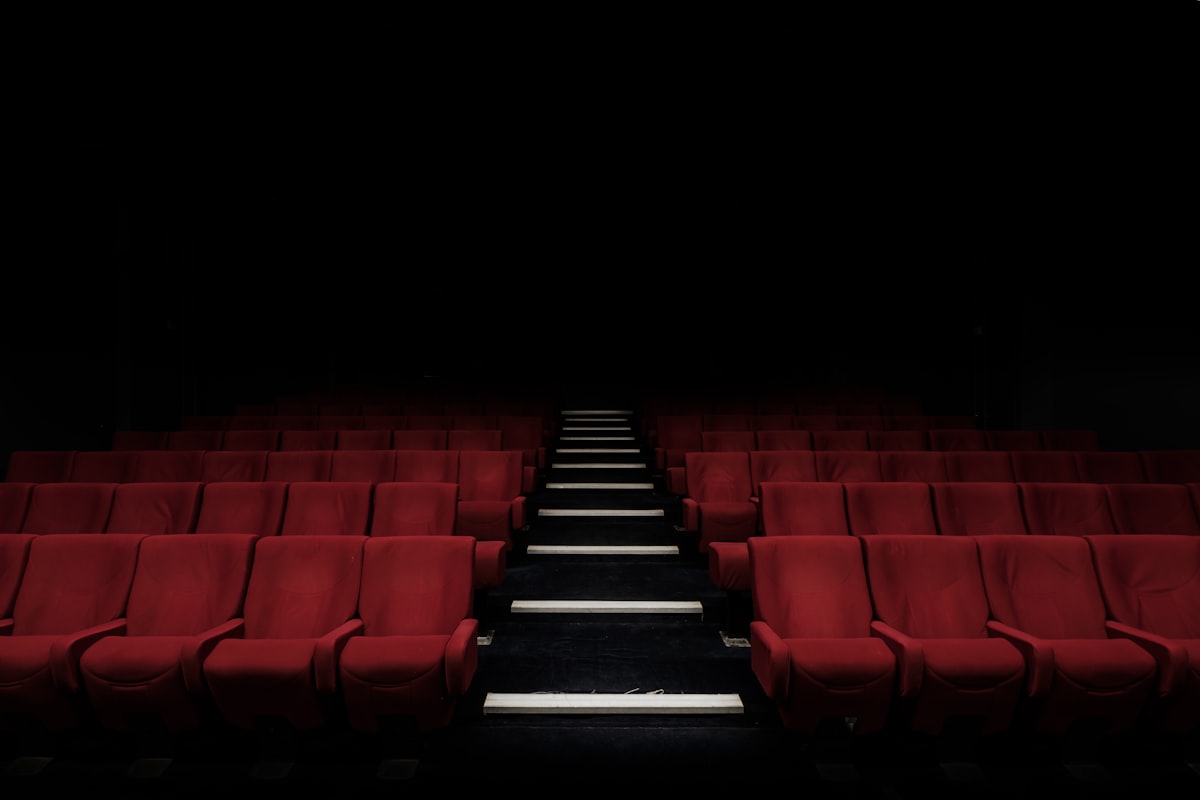
The screening room in the basement of a recently completed villa in Cap Ferrat measures exactly 8.2 metres by 5.4 metres — dimensions calculated not by interior decorators but by acoustic engineers to achieve a reverberation time of 0.4 seconds at 500 Hz, the precise point at which dialogue remains intelligible while orchestral scoring retains its spatial depth. The walls are clad in perforated walnut panels concealing 4,800 individually calibrated bass traps. The twelve seats — hand-stitched by Poltrona Frau's bespoke division in Tolentino — incorporate haptic transducers that translate low-frequency sound into physical sensation. The projector, a Christie CP4325-RGB pure laser unit, produces 25,000 lumens across a 5.5-metre acoustically transparent screen woven from micro-perforated synthetic fabric. The total investment: €1.2 million, excluding the structural engineering required to isolate the room's vibrations from the rest of the residence.
The Acoustic Architecture
The fundamental challenge of private cinema design is not visual — modern laser projectors and LED walls deliver images that exceed commercial cinema quality — but acoustic. Sound behaves according to physical laws that are indifferent to budget, taste, or the wishes of interior designers. A room's dimensions determine its resonant frequencies. Its surfaces determine how sound energy is absorbed, reflected, or diffused. Its isolation from the surrounding structure determines whether the 115-decibel peak output of a Dolby Atmos system will be experienced as cinematic immersion or as a structural nuisance that rattles windows three floors above.
The leading firms in this field — Theo Kalomirakis (New York), WSDG (Basel/New York), Waterfall Audio (Warsaw) — approach private cinema design as an exercise in applied physics before it becomes an exercise in interior architecture. Room dimensions are specified to avoid modal clustering (the phenomenon where multiple resonant frequencies overlap, creating audible peaks and nulls at specific seating positions). Wall and ceiling geometries are calculated to distribute early reflections evenly across the listening area. Bass management systems — often requiring dedicated mechanical rooms adjacent to the cinema itself — ensure that low-frequency energy is controlled rather than merely absorbed.
The Dolby Atmos Revolution
The introduction of Dolby Atmos to the residential market in 2014 — and its subsequent evolution through increasingly sophisticated processor platforms — has fundamentally redefined what private cinema can achieve. Unlike traditional surround-sound formats, which assign audio to discrete channels (front, rear, side), Atmos treats individual sounds as three-dimensional objects that can be positioned anywhere in the room's acoustic volume, including overhead. A helicopter doesn't play from the "rear surrounds"; it moves through three-dimensional space above the listener's head, its trajectory calculated in real time by the processor based on the room's specific speaker configuration.
Implementing Atmos at reference level in a residential setting requires a minimum of 24 speakers — typically configured as a 7.1.4 or 9.1.6 array — plus multiple subwoofers positioned to achieve uniform bass response across all seating positions. The overhead channels, which define Atmos's spatial signature, must be ceiling-mounted at specific angles relative to each seat — a requirement that imposes strict geometric constraints on room design and makes retrofit installations in existing properties significantly more complex (and expensive) than new-build integrations.
Materials: The Intersection of Acoustics and Aesthetics
The most architecturally successful private cinemas resolve a tension that less sophisticated installations simply ignore: the conflict between acoustic performance (which demands specific surface treatments at specific positions) and visual refinement (which demands coherent material narratives and spatial elegance). The solution, in the best examples, is not compromise but integration — materials selected for their acoustic properties that are simultaneously beautiful in their own right.
Perforated timber panels — typically walnut, oak, or teak — have become the dominant wall treatment in high-end installations. The perforation pattern (hole diameter, spacing, open area percentage) determines the panel's acoustic absorption coefficient across the frequency spectrum, allowing designers to tune the room's reverberation characteristics while presenting a warm, tactile surface that reads as fine cabinetry rather than acoustic treatment. Behind the timber, layers of mineral wool or recycled cotton absorber handle mid-and-low-frequency energy. The visual result is a room that feels like a gentleman's library — or a yacht's saloon — rather than a recording studio.
Fabric — specifically, acoustically transparent woven textiles — serves a dual function as wall covering and speaker concealment. The finest examples use fabrics from Kvadrat, Dedar, or Rubelli, selected for their visual texture and acoustic transparency (the ability to pass sound through the weave without audible colouration). Entire speaker arrays can disappear behind fabric walls, creating the uncanny effect of sound emerging from apparently solid surfaces — an illusion that enhances the immersive quality of the cinema experience while maintaining the visual minimalism that contemporary interior design demands.
The Seating Ritual
Cinema seating has evolved from a functional commodity into an independent luxury category. Firms like Fortress Seating (Dallas), Cineak (Miami), and Moovia (Barcelona) produce chairs that incorporate motorised recline mechanisms, heated surfaces, integrated refrigeration (for beverages), USB and wireless charging, LED pathway lighting, and the haptic bass transducers that translate low-frequency audio into physical vibration — the rumble of an earthquake, the impact of an explosion, the subsonic throb of a spaceship's engines felt through the body rather than merely heard through the ears.
The most rarefied installations commission seating from automotive or aviation upholsterers — the same ateliers that produce interiors for Rolls-Royce, Hermès, or Bombardier business jets. A set of twelve bespoke cinema seats upholstered in full-grain aniline leather by Poltrona Frau's Contract division, with integrated haptic systems and motorised everything, represents an investment of €180,000-300,000 — more than most people spend on a car, and justified by the same logic that drives all ultra-luxury expenditure: the conviction that time spent in precisely engineered comfort is time better spent.
Beyond the Screen
The most significant trend in private cinema design is the dissolution of the cinema's boundaries — the integration of screening capability into spaces that serve multiple functions rather than the construction of dedicated, single-purpose rooms. Motorised screens descend from ceilings in living rooms. Short-throw laser projectors cast 120-inch images on apparently blank walls. Outdoor cinema systems transform terraces, pool decks, and garden pavilions into open-air screening environments with sound quality that, while necessarily compromised by the absence of acoustic enclosure, is nonetheless astonishing in its spatial precision.
This evolution reflects a broader shift in ultra-luxury residential design: the rejection of rooms defined by single activities in favour of spaces that adapt fluidly to their inhabitants' shifting desires. The dedicated screening room is not disappearing — it remains the only environment capable of delivering reference-quality audio-visual performance — but it is being supplemented by distributed cinema capability that makes the cinematic experience available throughout the residence, at any time, without the formality of descending to the basement and dimming the lights.
In this sense, the private cinema has become a metaphor for luxury itself in 2026: not a fixed destination but a pervasive quality woven into the architecture of daily life. The technology has become sophisticated enough to disappear. The acoustics have become precise enough to feel natural. And the experience — of sitting in perfect darkness, in perfect comfort, while images and sounds of extraordinary fidelity unfold around you — has become one of the few forms of domestic luxury that genuinely cannot be replicated in any public or commercial setting, no matter how exclusive.
Discover Maison
Explore the world's finest residential design, architecture and lifestyle.
← Back to Maison Latitudes