The Immersive Cinema: How Spatial Audio and 16K Projection Transformed the Private Screening Room into Ultra-Luxury Architecture's Most Technologically Ambitious Space
March 2026 · 14 min read
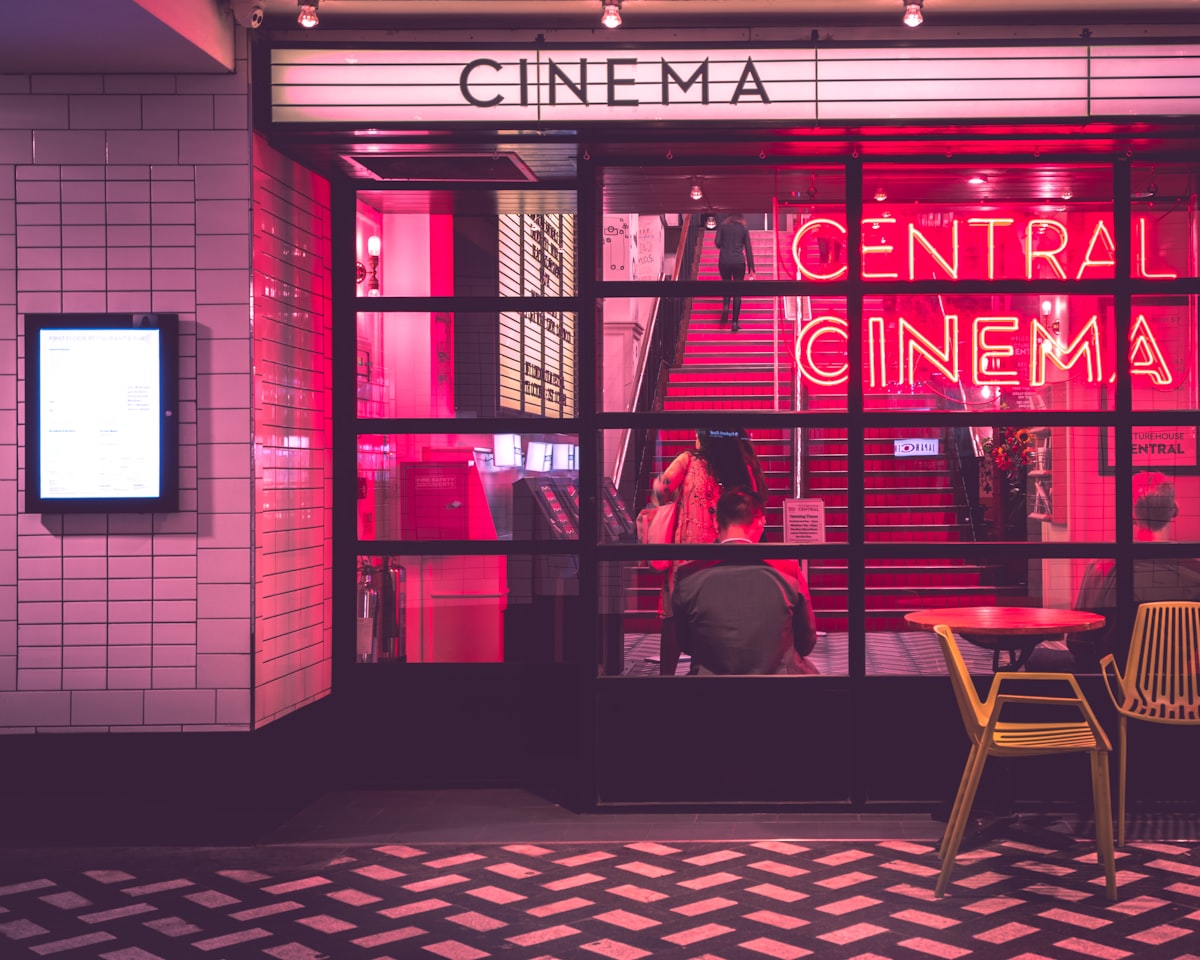
The private cinema has existed, in various forms, since William Randolph Hearst installed a screening room at San Simeon in the 1920s. For most of that century, the proposition was simple: a dark room, a projector, comfortable seats, a screen. The technology improved — 16mm gave way to 35mm, then to digital projection, then to 4K — but the fundamental architecture remained unchanged. A private cinema was a small commercial cinema with better upholstery. That era ended around 2022, when three technologies converged to create something genuinely new: spatial audio systems capable of object-based sound rendering, micro-LED walls that eliminate the optical compromises of projection, and haptic integration that makes the viewing experience physical as well as visual and auditory. The private cinema is no longer a room where you watch films. It is a room that makes films happen around you.
The End of the Screen
The most significant shift in private cinema design is the obsolescence of the projected image. Micro-LED wall technology — pioneered by Samsung's The Wall and now offered by Sony, LG, and several specialist manufacturers — allows seamless, bezel-free displays of virtually any size and aspect ratio to be installed as architectural elements. A 200-inch micro-LED wall does not reflect ambient light, does not require a darkened room for optimal performance, and produces contrast ratios and colour accuracy that exceed any projection system regardless of price. The resolution ceiling is essentially unlimited: walls of 8K and 16K are now routinely specified for rooms where the viewing distance makes pixel structure visible at 4K.
For architects, this eliminates the geometric constraint that has defined cinema design since the Lumière brothers: the throw distance. Without a projector, there is no optical path to protect, no alignment to maintain, no mechanical equipment generating heat and noise. The room can be any shape. The screen can wrap corners, curve to match seating geometry, or extend from floor to ceiling without the brightness fall-off that plagues even the finest laser projectors. The implications for spatial design are radical: the cinema room is no longer defined by its technology. The technology adapts to the room.
Sound as Architecture
Dolby Atmos — and its competitors, DTS:X and Auro-3D — represented the first significant evolution in cinema audio since surround sound was standardised in the 1970s. Rather than assigning sounds to channels (left, centre, right, surround), object-based audio systems track individual sound objects in three-dimensional space, rendering them through whatever speaker configuration the room provides. A helicopter crossing overhead is not a pre-mixed pan from left surround to right surround; it is a sonic object with coordinates that the rendering engine translates into speaker assignments in real time.
In commercial cinemas, Atmos typically deploys 64 speakers. In the most ambitious private installations, the count exceeds 100 — not because more speakers are always better, but because the smaller room volumes and shorter distances to the listener demand finer spatial resolution. At Theo Kalomirakis's studio in Manhattan, which has designed private cinemas for clients including Jerry Seinfeld and Ralph Lauren, the standard Atmos specification now includes ceiling speakers at 300mm centres, creating an overhead sound field dense enough to track a raindrop from one side of the room to the other.
The acoustic treatment required to support this level of spatial precision is itself an architectural statement. The combination of absorptive, diffusive, and reflective surfaces that optimises a room for object-based audio produces wall and ceiling geometries that are visually striking — faceted panels, curved diffusers, fabric-wrapped absorbers in geometries that recall Brutalist sculpture. The best private cinema designers have learned to make the acoustics visible, treating the room's sonic infrastructure as a design feature rather than a technical necessity to be hidden behind flat panels.
The Haptic Dimension
The integration of haptic feedback into private cinema seating represents the most genuinely novel development in the space. Systems from D-BOX (which began in commercial installations and now offers a residential platform) and Immit use accelerometers and transducers built into the seating platform to translate low-frequency audio content into physical motion — not the crude vibration of a subwoofer bolted to a chair, but calibrated, directional movement synchronised to on-screen action with millisecond precision.
The effect is physiological rather than spectacular. During a film's score, the bass frequencies are felt as a gentle swell beneath the listener, adding emotional weight without drawing attention to the mechanism. During action sequences, the directional transducers create a sensation of momentum — a car chase pulls the viewer's body in the direction of the turn; an explosion pushes from below and behind. The technology is subtle enough that viewers frequently cannot identify what is different about the experience; they simply report that the film felt more intense, more present, more real.
The Control Room Vanishes
Traditional private cinema installations required a separate equipment room — typically the same size as the cinema itself — to house projectors, processors, amplifiers, and cooling systems. The shift to direct-view displays, Class D amplification, and networked audio processing has compressed this infrastructure dramatically. A contemporary immersive cinema's entire signal chain can fit in a single 42U rack, ventilated by silent liquid cooling, controlled remotely via iPad or Crestron panel.
The space liberated by this compression is significant. A room that previously required 60 square metres for cinema plus equipment room now needs only 35 square metres for the cinema itself, with the rack tucked into a utility closet. For urban residences — London townhouses, Parisian apartments, Manhattan penthouses — this makes immersive cinema feasible in spaces that would have been too small for a traditional installation. The technology has not just improved the cinema experience; it has democratised its footprint.
The Content Question
The most sophisticated private cinema installation is only as compelling as the content it delivers. The Atmos catalogue now exceeds 10,000 titles, including virtually every major theatrical release since 2014. But the most interesting content being created for immersive environments is not Hollywood product — it is bespoke: commissioned visual art, generative soundscapes, and architectural visualisations that use the cinema's capabilities to create experiences that exist nowhere else.
Several studios now specialise in creating ambient content for private immersive environments — slow-moving footage of landscapes, oceans, or weather systems, rendered in 8K with spatial audio harvested from field recordings. These pieces — which run for hours without narrative or interruption — transform the cinema from an entertainment space into something closer to a meditation chamber or a digital window onto environments the viewer has chosen to inhabit. A client in Dubai commissioned a 12-hour recording of the Norwegian aurora borealis, captured in 16K with a 128-channel ambisonic microphone array; the result plays on a nightly loop, turning the cinema into the Arctic for the duration of the piece.
What It Costs
An entry-level immersive cinema — micro-LED wall at 4K, 24-speaker Atmos system, acoustic treatment, automated lighting and climate control — starts at approximately €350,000, installed and calibrated. A reference-grade installation — 16K LED, 64+ speakers, haptic seating for eight, bespoke acoustic architecture, dedicated equipment room with redundancy — ranges from €1.5 million to €4 million. The most ambitious projects, which incorporate moveable walls, retractable seating, and mode-shifting capability (cinema to listening room to gaming environment), have exceeded €8 million.
These figures place the private immersive cinema in the same investment category as a collector car or a significant art acquisition — and, like both, the best installations appreciate in experiential value as content libraries expand and technology updates (which are modular in well-designed systems) extend their capability. The cinema that was state-of-the-art in 2024 remains extraordinary in 2026; with a processor upgrade and a speaker recalibration, it will remain extraordinary in 2030.
The Room Becomes the Film
The trajectory of private cinema design points toward a future in which the distinction between the room and the content dissolves entirely. Curved LED surfaces wrapping the viewer's peripheral vision, overhead displays creating an artificial sky, directional audio placing sounds at precise positions in the listener's space, haptic seating adding a physical dimension — the cumulative effect is not a better version of watching a film. It is a different activity altogether, one for which we do not yet have a name but which the most forward-thinking architects are already designing rooms to accommodate.
The private cinema is no longer the room in the basement with the big screen and the leather recliners. It is the most technologically dense space in the home, the room where architecture, acoustics, optics, and computation converge to create an environment that can be anything its owner wishes. It is, in the truest sense, the room where the house becomes more than a house.
Explore more from Maison Latitudes
Discover classic screening room design or explore invisible smart home technology.