The Private Aquarium: How Marine Architecture Became Ultra-Luxury Living's Most Mesmerically Immersive Feature
April 1, 2026 · 14 min read
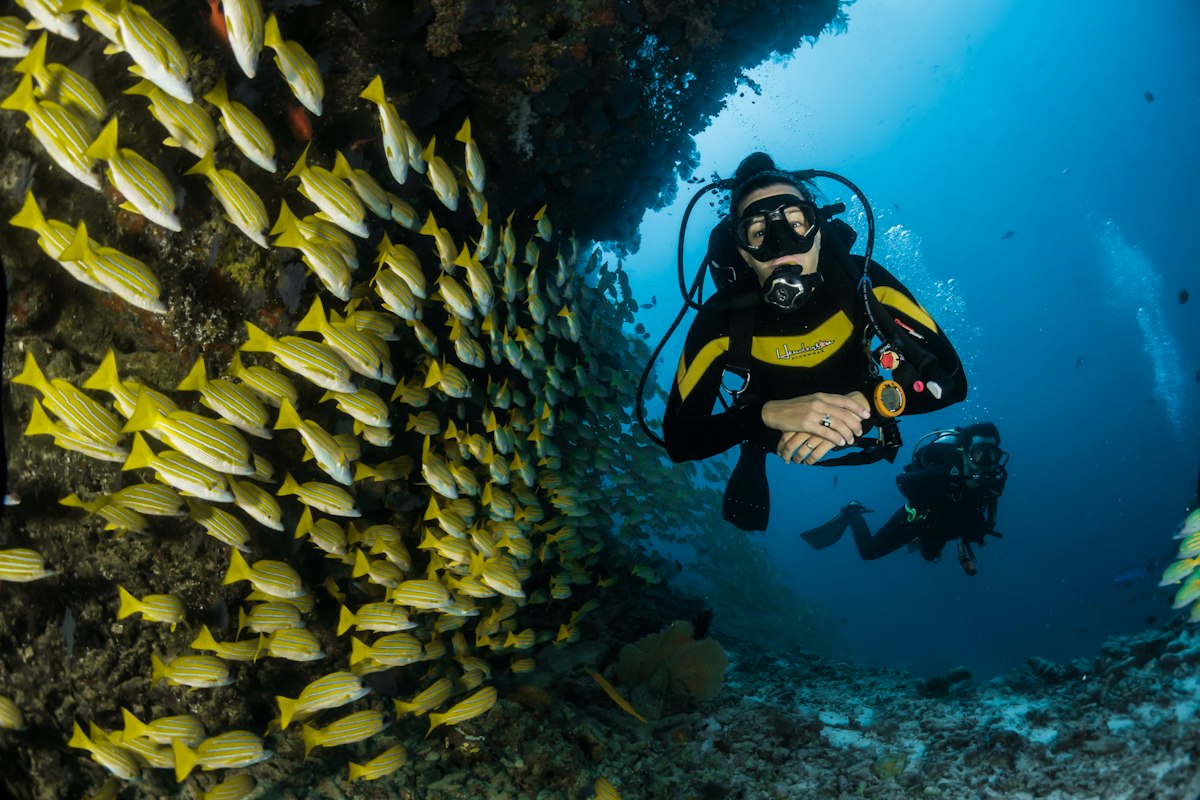
In the evolving taxonomy of ultra-luxury residential features, certain amenities declare their owner's wealth while others reveal their sensibility. The private aquarium belongs unequivocally to the second category. Unlike the home cinema, which miniaturises a commercial experience, or the wine cellar, which stores a commodity, the private aquarium introduces a living ecosystem into the architecture of domestic life — a feature that demands continuous expert stewardship, that changes character with every hour and every season, and that transforms the psychological quality of the spaces it inhabits in ways that no static material, however precious, can achieve. In the upper reaches of the luxury property market, where the distinction between exceptional and extraordinary determines valuations measured in millions, the private aquarium has emerged as perhaps the single most technically ambitious and emotionally transformative feature that residential architecture can accommodate.
The Architecture of Immersion
The first design decision in any serious private aquarium project — and the decision that separates the commissioned masterpiece from the upscaled fish tank — is the relationship between water volume and architectural integration. At the entry level of luxury aquariums, wall-mounted systems of 1,000 to 3,000 litres are installed within existing cabinetry or partition walls, functioning as kinetic art installations that provide the visual pleasure of marine life without fundamentally altering the spatial character of the room. These systems, typically housing tropical reef fish and soft corals, require dedicated filtration infrastructure occupying approximately the same volume as the visible tank — a hidden architecture of sumps, protein skimmers, calcium reactors, and UV sterilisers that constitutes the technical infrastructure of the aesthetic experience.
At the intermediate level — 5,000 to 20,000 litres — the aquarium becomes an architectural element rather than a furnishing. These installations typically involve structural glazing that functions simultaneously as room divider, light source, and living mural. A 15,000-litre reef aquarium separating a living room from a dining space, for example, creates a domestic experience in which every meal is consumed against a backdrop of drifting anthias, pulsing coral polyps, and the hypnotic undulations of a resident pair of regal angelfish. The glass itself — typically low-iron, optically clear panels of 25-40mm thickness, bonded with structural silicone — becomes the boundary between two worlds, a membrane through which the terrestrial and marine environments observe each other with mutual indifference.
At the apex — 30,000 litres and beyond — the aquarium transcends its status as an architectural feature and becomes the architecture itself. These installations, which may occupy entire basement levels, wrap around staircases, or form floor-to-ceiling panoramic walls in entertainment spaces, represent engineering challenges comparable to those of commercial aquaria, compressed into residential contexts where aesthetic standards are exponentially higher and failure is correspondingly unacceptable. A 50,000-litre system housing a Caribbean reef ecosystem — with living stony corals, schools of chromis, a resident moray eel, and perhaps a small nurse shark — requires structural engineering for water loads exceeding fifty tonnes, electrical infrastructure for lighting systems drawing 5-10 kW continuously, and water management systems that maintain temperature, salinity, pH, and nutrient levels within parameters tighter than many laboratory standards.
The Reef Proposition
The most technically demanding — and aesthetically rewarding — category of private aquarium is the reef system: a living coral ecosystem that replicates the biological complexity of a tropical reef within a controlled architectural environment. Modern reef-keeping technology, which has advanced more rapidly in the past decade than in the preceding century, now permits the cultivation of stony corals (Acropora, Montipora, Stylophora) that were previously considered impossible to maintain outside ocean environments. LED lighting systems that replicate the spectral output and daily rhythm of tropical sunlight, automated dosing systems that maintain calcium, alkalinity, and magnesium at reef-precise levels, and flow-management technology that creates the random, turbulent water movement that corals require — these technical systems, integrated behind the visible architecture, enable reef aquariums that are not merely decorative representations of the ocean but functioning ecosystems that grow, reproduce, and evolve over time.
The visual effect of a mature reef aquarium — one that has been established for three to five years and has achieved the density of coral coverage and biological diversity that this maturation period permits — is qualitatively different from any other residential interior feature. The colours are not painted or printed but biological: the fluorescent greens, electric blues, and deep violets of coral tissue under appropriate lighting create a chromatic environment that no designer can specify from a palette. The movement is not mechanical but organic: the gentle sway of soft corals, the darting trajectories of wrasses, the patient patrol of a Tang through its territory. The light is not static but temporal: shifting from the blue dawn simulation through the white intensity of midday to the orange-pink spectrum of sunset, and finally to the deep-blue moonlight mode that reveals the nocturnal behaviours of shrimp, crabs, and tube worms that are invisible during the day.
The Psychological Dimension
The scientific literature on the psychological effects of aquarium observation is remarkably consistent. Peer-reviewed studies published in journals ranging from Environment & Behavior to the Journal of the American Heart Association have documented statistically significant reductions in heart rate, blood pressure, and cortisol levels in subjects exposed to aquarium environments, with effects that increase with the biological complexity and species diversity of the observed ecosystem. These are not marginal effects; they are of a magnitude comparable to established pharmacological interventions for mild anxiety and stress-related hypertension.
For the ultra-luxury homeowner, these findings translate into a feature that is simultaneously aesthetic, architectural, and therapeutic — a residential amenity that enhances the quality of daily life not merely through visual pleasure but through measurable physiological modulation. The private aquarium in a primary living space transforms the domestic routine: the morning coffee consumed before a reef wall where a mandarin dragonet performs its dawn feeding is a qualitatively different experience from the same coffee consumed before a static artwork, however masterful. The evening conversation conducted against the slow oscillation of a jellyfish display — an increasingly popular aquarium typology — occupies a psychological register that no lighting design, however sophisticated, can achieve.
The Jellyfish Alternative
Within the aquarium category, the dedicated jellyfish display has emerged as a distinct luxury typology — one that appeals to a client profile that values meditative abstraction over ecological narrative. Jellyfish (typically moon jellies, Aurelia aurita, or the more chromatically dramatic Pacific sea nettles, Chrysaora fuscescens) require cylindrical or kreisel-design tanks that maintain the gentle circular flow necessary to keep the organisms suspended and prevent contact with surfaces. The resulting installations — often illuminated with colour-programmable LED systems that can shift the jellies' translucent bells through any hue in the visible spectrum — produce an effect that is closer to kinetic sculpture than to traditional aquarium-keeping.
The architectural integration of jellyfish displays has evolved its own design vocabulary: cylindrical columns from floor to ceiling that function as luminous pillars in entrance halls; horizontal ceiling-mounted panels that transform the experience of lying in bed into an act of submarine observation; and curved wall installations in bathrooms where the pulsing rhythm of jellyfish movement creates a hypnotic accompaniment to the bathing ritual. These installations, typically ranging from 500 to 5,000 litres, are less technically demanding than reef systems but require their own specialised infrastructure: chiller units (jellies prefer cooler temperatures than tropical reef fish), specific filtration that removes the organisms' waste without creating currents that damage their delicate tissues, and automated feeding systems that deliver precisely portioned brine shrimp at appropriate intervals.
The Stewardship Model
No serious discussion of private aquarium ownership can avoid the question of maintenance, and it is in this domain that the line between luxury amenity and luxury burden is most sharply drawn. A reef aquarium of 10,000+ litres requires approximately 10-15 hours of expert maintenance per week: water testing, coral fragging and repositioning, equipment calibration, fish health monitoring, and the periodic interventions (dosing adjustments, algae management, pest control) that maintain the system at exhibition quality. For most ultra-luxury homeowners, this maintenance is contracted to specialist aquarium management companies — firms that employ marine biologists, aquatic veterinarians, and technical specialists who visit the property on fixed schedules and are available for emergency response.
The annual operating cost of a premium private aquarium, including maintenance staffing, electrical consumption, livestock replacement, and consumables, typically ranges from €25,000 to €80,000 for systems of 10,000-50,000 litres — a figure that represents a fraction of a percentage of the property values in which these systems are installed but that demands acknowledgement in any honest assessment of the amenity's total cost of ownership. The most sophisticated aquarium management contracts include live-monitoring systems — IoT sensors feeding real-time data on temperature, pH, salinity, dissolved oxygen, and equipment status to remote dashboards — that enable intervention before parameters deviate visibly, maintaining the effortless perfection that the owner experiences as the system's natural state.
The Design Integration
The most successful private aquarium installations share a principle that distinguishes them from their commercial counterparts: the aquarium is not displayed within the architecture; the architecture is designed around the aquarium. This principle manifests in decisions that must be made at the earliest stages of architectural design: structural loadings calculated for water volumes measured in tonnes; service corridors planned behind display walls to permit maintenance access without disrupting living spaces; electrical and plumbing infrastructure specified to aquarium-grade redundancy standards; and acoustic isolation designed to ensure that the mechanical systems — pumps, skimmers, wave-makers, chillers — operate below the perception threshold of the adjacent living spaces.
The material conversation between aquarium and architecture offers design opportunities that few other features can provide. A reef aquarium installed in a wall of book-matched Calacatta marble creates a dialogue between geological and biological beauty that neither element could achieve independently. A jellyfish cylinder rising through the centre of a floating concrete staircase produces a spatial experience — ascent around a column of living light — that collapses the categories of architecture, art, and biology into a single, irreducible experience. A long, narrow aquarium integrated into a kitchen island, housing a living reef visible from both the cooking and dining sides, transforms the preparation of food into a multi-sensory encounter with the marine environment — an arrangement that elevates the kitchen from a functional space to a philosophical statement about humanity's relationship with the living world.
The Investment Perspective
For property valuation professionals, the private aquarium presents an assessment challenge. Unlike wine cellars, home cinemas, or spa facilities — amenities whose contribution to property value is well-established and relatively predictable — the private aquarium's impact on value depends on a matrix of factors: the quality of the installation (a poorly designed system can be a liability rather than an asset), the degree of architectural integration (a retrofitted aquarium adds less value than one designed into the original architecture), and the market's assessment of the ongoing maintenance commitment. At the highest quality levels, however, the evidence is clear: professionally designed and maintained aquarium installations in properties valued above €10M consistently contribute a premium of 3-7% to assessed value — a return that significantly exceeds their installation cost when amortised over the typical ownership period.
More importantly, private aquariums of exhibition quality function as marketing differentiators in the ultra-luxury segment where properties compete for attention among buyers who have already seen every conventional amenity. In markets from Monaco to Miami, Dubai to Hong Kong, the property with the exceptional aquarium achieves a memorability and emotional impact that accelerates sale timelines and strengthens negotiating positions. In a market where the marginal amenity — the fifteenth bathroom, the fourth garage bay — adds diminishing returns, the private aquarium adds something no conventional feature can provide: life itself, in motion, in colour, in continuous, mesmerising change.
The Verdict
The private aquarium represents the convergence of architecture, marine biology, engineering, and psychology into a residential feature that is, in the most literal sense, alive. It demands more of its owner than any other luxury amenity — more investment, more maintenance, more knowledge, more attention — and it rewards that demand with an experience that no other feature can provide: the daily immersion in an environment of beauty that grows, changes, responds, and evolves. In the hierarchy of ultra-luxury residential features, the private aquarium occupies a category of one: the only amenity that is not a thing but an ecosystem, not a possession but a relationship, not a statement of wealth but a commitment to the living world's most ancient and extraordinary expressions of beauty.