The Master Bathroom: How Spa-Grade Hydrotherapy Architecture Became Ultra-Luxury Living's Most Sensuously Engineered Private Sanctuary
March 23, 2026 · 14 min read
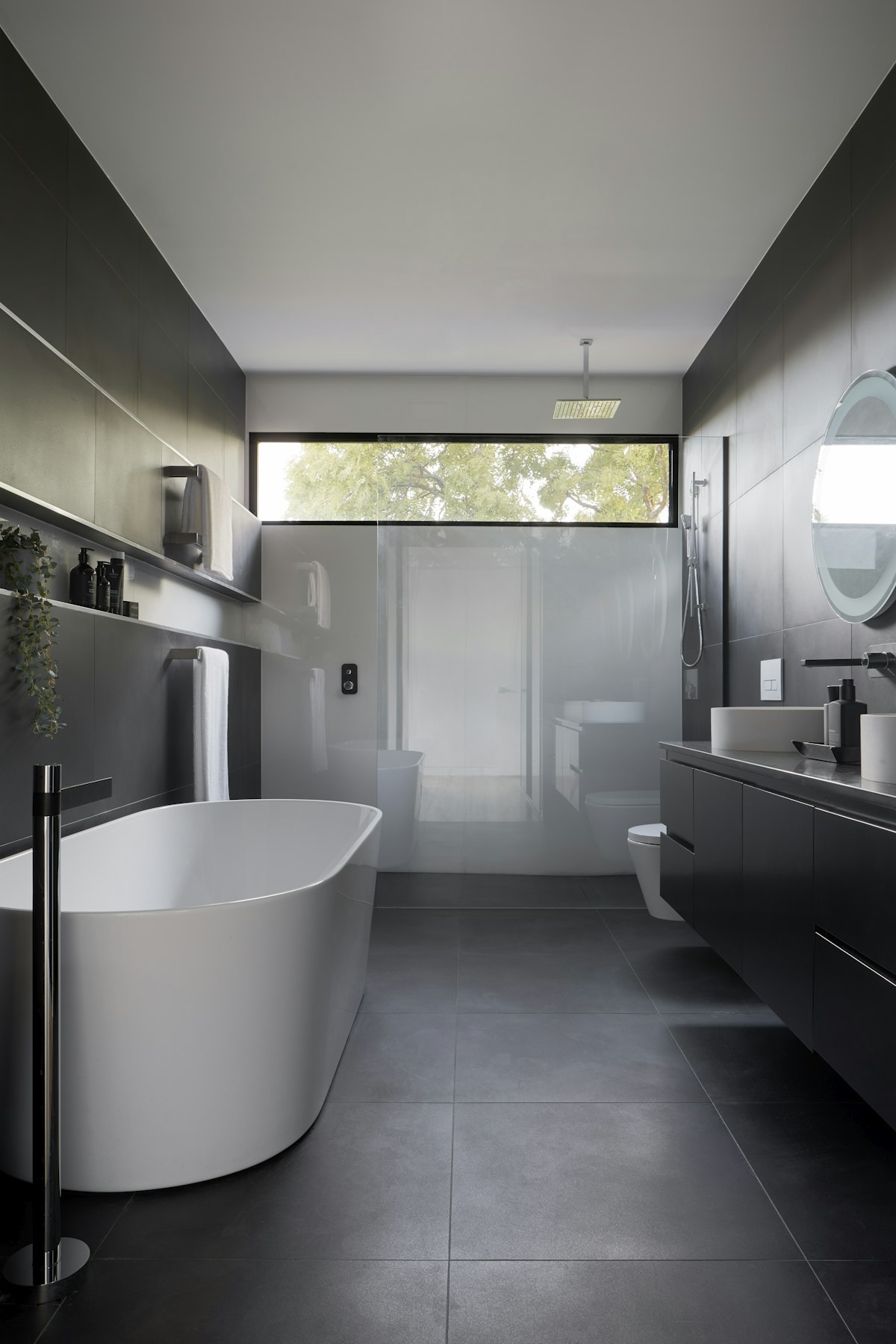
In the taxonomy of ultra-luxury residential architecture, no room has undergone a more radical transformation over the past two decades than the master bathroom. What was, even in the most expensive homes of the late twentieth century, fundamentally a utilitarian space — tiled surfaces, fitted fixtures, adequate lighting, functional ventilation — has evolved into something that the architectural profession now recognises as a distinct spatial category: the private hydrotherapy sanctuary. It is a room that costs more per square metre than any other space in the house. It requires more engineering systems, more specialist materials, more calibrated lighting, and more precise thermal management than any bedroom, kitchen, or living room. And it has become, for the most design-literate segment of the ultra-high-net-worth market, the definitive measure of a residence's architectural ambition.
The transformation reflects a fundamental shift in how the wealthiest individuals conceptualise domestic space. The master bathroom is no longer a room where one prepares for life; it is a room where one recovers from it. Its design priorities have accordingly migrated from cosmetic efficiency (good mirrors, adequate counter space, bright lighting) to therapeutic sophistication (thermal cycling, chromotherapy, acoustic isolation, air quality management, water treatment). The master bathroom of a €50 million residence is, in terms of its mechanical systems and sensory engineering, closer to a clinical wellness facility than to anything that domestic architecture has traditionally produced.
The Stone Imperative
No material decision in residential architecture carries more weight — aesthetically, financially, symbolically — than the stone selection for the master bathroom. In the most exceptional projects, the process begins not at a showroom but at a quarry. Architects and their clients travel to Carrara, to the Macedonian quarries that produce Volakas marble, to the Greek islands where Thassos white is extracted, to the Iranian highlands where onyx formations of extraordinary translucency are mined in conditions that make each block irreplaceable.
The objective is not merely to select a beautiful stone — beauty is baseline — but to secure a block of sufficient size and consistency to produce bookmatched slabs for the room's primary surfaces. Bookmatching — the technique of slicing adjacent slabs from the same block and opening them like the pages of a book to create a mirrored pattern — transforms stone from a surface material into a compositional element. When executed on the scale that a master bathroom demands — floor-to-ceiling, wall-to-wall, with the veining pattern flowing continuously across surfaces, around corners, and into niches — the result has a visual coherence that approaches the qualities of painting or textile art.
The cost of this approach is, by any conventional standard, extraordinary. A single block of Calacatta Viola marble, bookmatched across four walls and the floor of a master bathroom, can represent a material cost of €200,000 to €400,000 before cutting, finishing, and installation. The engineering required to support these stone surfaces — dead loads of several tonnes distributed across suspended floor structures, thermal isolation to prevent condensation damage, precision-calibrated underfloor heating to maintain the stone at skin temperature — adds further complexity. But for the architects and clients who pursue this level of material commitment, the stone is not an expense but an investment in sensory experience. A bathroom lined in bookmatched Calacatta is not a room with nice finishes; it is a geological environment, a space defined by stone that was formed under the Mediterranean two hundred million years ago and now serves as the most intimate architectural surface in the house.
The Thermal Circuit
The defining innovation of the contemporary ultra-luxury master bathroom is the integration of a thermal circuit — a sequence of temperature experiences borrowed from the Finnish sauna tradition, the Japanese onsen culture, and the Roman thermae, and reinterpreted for private residential use. In its most developed form, the thermal circuit includes a dry sauna (maintained at 80–90°C), a steam room (at 42–45°C with 100% humidity), a cold plunge pool (maintained at 4–8°C), a heated relaxation surface (a stone daybed maintained at body temperature), and one or more shower experiences that can deliver anything from a gentle tropical rain to a cold-water deluge calibrated to activate the cardiovascular system's cold-shock response.
The engineering required to accommodate these varied thermal environments within a single residential suite is formidable. Each zone requires independent climate control, waterproofing, drainage, and ventilation. The sauna requires a dedicated electrical supply and a ventilation system that exchanges the room's air volume six to eight times per hour. The cold plunge requires a chiller unit, filtration, UV sterilisation, and a circulation system that maintains water temperature to within half a degree. The steam room requires a commercial-grade steam generator, typically located in a service area below or adjacent to the bathroom, with insulated steam delivery pipes and a condensation management system that prevents moisture migration into surrounding structure.
The integration of these systems — each of which generates heat, moisture, noise, or vibration — into a space that must simultaneously maintain an atmosphere of serene calm is the central engineering challenge of master bathroom design. The best projects achieve this through obsessive attention to acoustic isolation (floating floor construction, mass-loaded vinyl barriers, vibration-decoupled mechanical connections) and the strategic location of all mechanical equipment in dedicated plant rooms that are physically separated from the bathroom itself. The occupant should hear only water, feel only warmth or cold, and see only stone, glass, and light. Every mechanical reality must be rendered invisible.
The Light Programme
Lighting in the ultra-luxury master bathroom has evolved from a single design decision (fixture selection) into a programmatic discipline closer to theatrical lighting design than to conventional architectural illumination. The most sophisticated systems deploy hundreds of individually addressable LED sources — concealed in stone coves, embedded in floor channels, integrated into mirror assemblies, submerged in bathtubs and plunge pools — controlled by automation systems that offer not fixed settings but continuously variable light programmes calibrated to the time of day, the activity being performed, and the physiological state of the occupant.
A morning programme might begin with a gradual increase in blue-spectrum light (supporting cortisol production and circadian alertness) integrated with warm stone surfaces and invigorating water temperatures. An evening programme might transition through amber and warm-white spectra toward the deep red wavelengths that support melatonin production, while the thermal circuit shifts from stimulating cold-plunge sequences to restorative warmth. The bathtub — increasingly positioned as the room's centrepiece, often freestanding in natural stone carved from a single block — becomes a chromotherapy instrument, its submerged lighting shifting through colour temperatures that correspond to established wellness protocols.
The sophistication of these lighting systems raises a question that the ultra-luxury residential market is increasingly comfortable answering affirmatively: can a room be therapeutic? The evidence from circadian science, chromotherapy research, and hydrotherapy tradition suggests that it can — and that the master bathroom, with its combination of water, stone, controlled temperature, and programmable light, is uniquely positioned to deliver health benefits that extend well beyond hygiene.
The Fixtures as Sculpture
In the most ambitious master bathroom projects, every fixture is selected or commissioned as an individual object of design significance. The bathtub — the room's gravitational centre — may be carved from a single block of marble (a process that wastes approximately 80% of the source block and requires four to six months of CNC cutting and hand finishing), cast in concrete with a custom pigment developed for the project, or fabricated in natural stone composites that allow forms impossible in quarried material. The weight of these objects — a solid stone bathtub can exceed two tonnes — requires structural engineering that is integrated from the earliest stages of the building's design, with reinforced floor systems, dedicated support columns, and lifting strategies that often involve crane access through temporarily removable roof sections.
Brassware — the taps, controls, showerheads, and drainage fittings that constitute the bathroom's interface with water — represents another domain where the ultra-luxury market has diverged entirely from the mainstream. The standard approach to residential brassware — selection from a manufacturer's catalogue, installation by a plumber — gives way, in the most exceptional projects, to bespoke fabrication by specialist metalworkers. Fittings are designed by the project architect, prototyped in 3D-printed resin, refined through multiple iterations, and then manufactured in solid brass, bronze, or stainless steel with hand-applied finishes (brushed, patinated, hand-polished, living finishes that develop character over time) that elevate each fitting from functional hardware to sculptural object.
The Spatial Generosity
Perhaps the most immediately striking characteristic of the contemporary ultra-luxury master bathroom is its scale. In the most exceptional residences, the master bathroom suite — encompassing the bathing area, thermal circuit, dressing room, and associated service spaces — occupies between 60 and 120 square metres. This is larger than most European apartments. It is a spatial allocation that would have been inconceivable a generation ago, when even the most lavish master bathrooms rarely exceeded 20 square metres, and it reflects a fundamental reordering of domestic priorities in which wellness space has displaced entertainment space as the primary expression of residential luxury.
This spatial generosity is not merely dimensional extravagance. The programme of activities that the contemporary master bathroom accommodates — thermal cycling, hydrotherapy, grooming, dressing, fitness recovery, meditation — requires separation between zones, acoustic privacy between functions, and circulation space that allows the occupant to move between experiences without the sense of compression that characterises conventional bathrooms. The bathtub is not pushed against a wall; it sits in space, approachable from all sides, its relationship to windows, to views, to light calibrated with the same precision that an architect would apply to the positioning of a fireplace or a staircase. The shower is not a booth but a room — a walk-through wet room with multiple water sources (overhead rain, body jets, hand shower, drench) and sufficient space to move freely, stretch, and experience water as an immersive environment rather than a targeted spray.
In the final analysis, the ultra-luxury master bathroom represents something more than the sum of its material and mechanical investments. It represents a philosophical commitment to the proposition that the most valuable luxury is not what others see — the car, the watch, the address — but what only you experience: the temperature of the stone beneath your feet at six in the morning, the quality of light as you lower yourself into water, the silence that six inches of acoustic isolation and a perfectly calibrated ventilation system can create. It is luxury at its most intimate, its most irreducible, and — for those who have the means and the taste to pursue it — its most rewarding.
Explore Ultra-Luxury Living
Join the Maison Latitudes circle for privileged access to the world's most exceptional residential architecture and design.
Request Access