The Private Observatory: How Celestial Architecture Became Ultra-Luxury Living's Most Philosophically Ambitious Space
March 21, 2026 · 11 min read
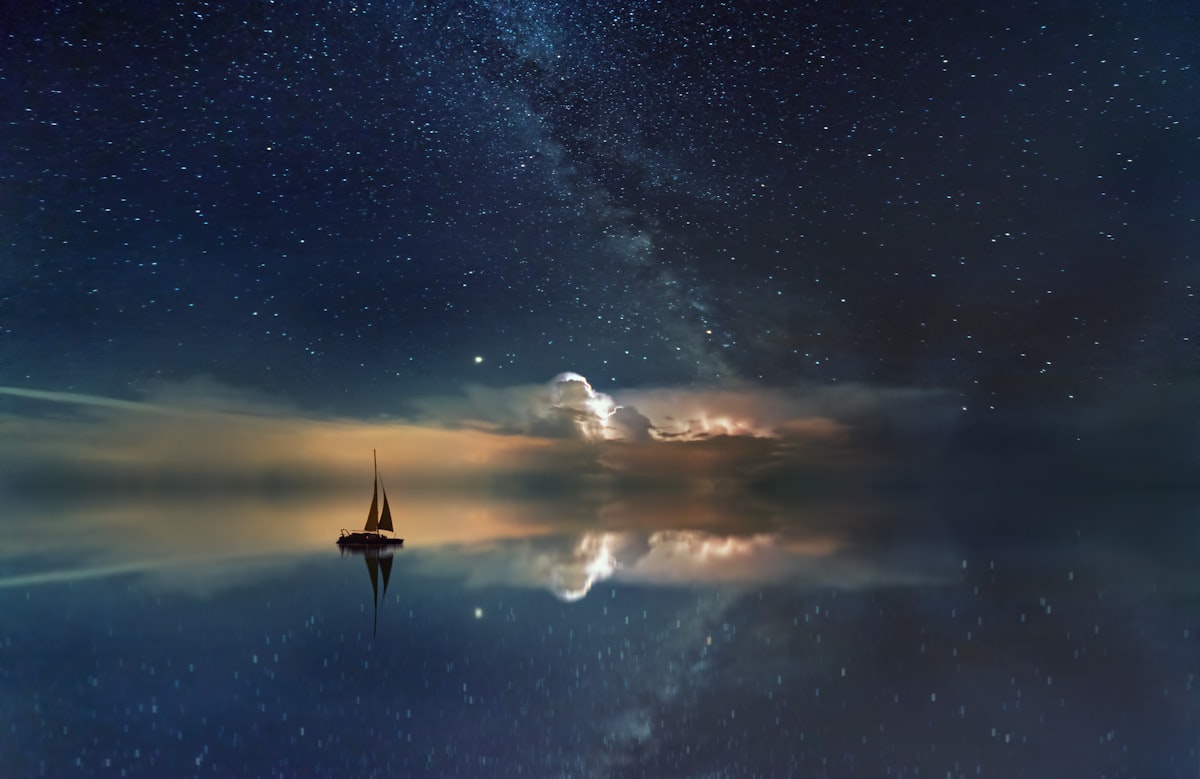
In the hierarchies of ultra-luxury residential amenity, there has always been a legible progression: the wine cellar signals connoisseurship, the art gallery signals cultural capital, the home cinema signals technological sophistication. But a new space has emerged at the apex of this taxonomy — one that signals something far more unsettling than wealth. The private observatory, equipped with research-grade telescopes and retractable dome architecture, announces that its owner has turned their gaze away from terrestrial acquisitions entirely and toward the only frontier that money cannot colonise: the sky itself.
The Architecture of Looking Up
The engineering challenges of integrating a functional observatory into a residential structure are formidable. A serious telescope requires thermal stability — the dome must equilibrate with outdoor temperatures to prevent convection currents that distort starlight. It requires vibration isolation — a foundation decoupled from the main structure to eliminate the micro-tremors generated by HVAC systems, elevators, and foot traffic. And it requires darkness — not merely the absence of electric light but the careful management of light pollution through strategic landscaping, blackout barriers, and coordination with neighbouring properties.
The firms specialising in private observatory construction — ASA Astrosysteme in Austria, PlaneWave Instruments in California, and Officina Stellare in northern Italy — report that commissions from ultra-high-net-worth individuals have tripled since 2020. A turnkey installation, encompassing a 3.5-metre retractable dome, a 700mm PlaneWave CDK telescope with adaptive optics, and a climate-controlled observation suite, typically costs between €2.5 and €5 million. The most ambitious projects — ground-up structures on dark-sky estates in Chile, Namibia, or the Canary Islands — can exceed €15 million.
The Dark-Sky Premium
The private observatory movement has created an entirely new category of real estate premium: the Bortle Scale rating. Named after amateur astronomer John Bortle, this nine-point scale measures the darkness of a night sky, from Class 1 (the darkest observable sky) to Class 9 (inner-city sky glow). Properties in Bortle Class 1-3 zones — typically found in remote desert, mountain, or island locations — now command significant premiums from observatory-minded buyers.
In the Atacama Desert of Chile, where the Bortle rating approaches theoretical perfection, a new category of luxury estate has emerged: the astro-hacienda. These properties, typically 500-1,000 hectares of high-altitude desert, combine traditional hospitality — infinity pools, vineyard dining, equestrian facilities — with world-class astronomical infrastructure. The most notable, a 750-hectare compound near the Paranal Observatory, sold in 2024 for $28 million to a tech executive who commissioned a custom 1-metre aperture telescope capable of imaging galaxies 200 million light-years distant.
The Citizen Science Dimension
What distinguishes the private observatory from other luxury amenities is its potential for genuine utility. While a wine cellar merely stores and a cinema merely displays, an observatory equipped with modern CCD imaging and spectroscopic capabilities can contribute to actual scientific research. Several private observatory owners have become prolific contributors to the International Astronomical Union's Minor Planet Center, discovering asteroids and comets that now bear their names — a form of immortality that no yacht, however large, can confer.
The American Association of Variable Star Observers (AAVSO) maintains a network of private observatories whose owners contribute systematic brightness measurements of thousands of variable stars — data that feeds directly into professional research programmes at Harvard, MIT, and the European Southern Observatory. For the observatory owner, this participation transforms an expensive hobby into a genuine intellectual pursuit, connecting the isolation of wealth to the collaborative enterprise of science.
The Dome as Social Space
The most sophisticated private observatories have evolved beyond solitary stargazing into curated social experiences. Architectural firms now design observation suites that accommodate 8-12 guests in heated, reclining seating with individual screens displaying the telescope's real-time feed. Guided observation evenings — led by professional astronomers retained on seasonal contracts — have become the ultimate dinner-party denouement: after the Margaux has been poured and the conversation has exhausted terrestrial topics, guests ascend to the dome for a two-hour journey through the visible universe.
One observatory designer describes these evenings as "the anti-yacht experience": where a superyacht projects wealth outward for public consumption, the observatory draws guests inward — into silence, darkness, and a confrontation with scale that renders net worth irrelevant. "You can own a 100-metre yacht," he notes, "and the Andromeda Galaxy is still 2.5 million light-years away. The observatory is the only luxury space that makes its owner feel small. And that, paradoxically, is why they build it."
The Philosophical Return
Perhaps the private observatory's most remarkable quality is its capacity to reframe the entire luxury project. The collector who spends decades accumulating material objects — houses, art, cars, timepieces — eventually confronts a ceiling: the diminishing marginal utility of another acquisition. The observatory offers an exit from this loop. It is a space dedicated not to having but to knowing, not to display but to discovery. Its value appreciates not through market forces but through the owner's growing competence — the ability to find a faint nebula, track a comet, or photograph the rings of Saturn with increasing clarity.
In an age when luxury is increasingly defined by access to experience rather than ownership of objects, the private observatory represents the logical terminus: access to the universe itself, from the privacy of one's own rooftop. It is the most expensive room in the house that contains nothing for sale — and everything worth seeing. When the dome retracts and the night sky fills the aperture, the owner is left with the oldest luxury of all: the unmediated experience of wonder, available to anyone who looks up, but pursued with intention by those who build a room for the purpose.