The Private Cinema: How Screening Room Architecture Became Ultra-Luxury Living's Most Cinematically Immersive Domestic Space
March 23, 2026 · 13 min read
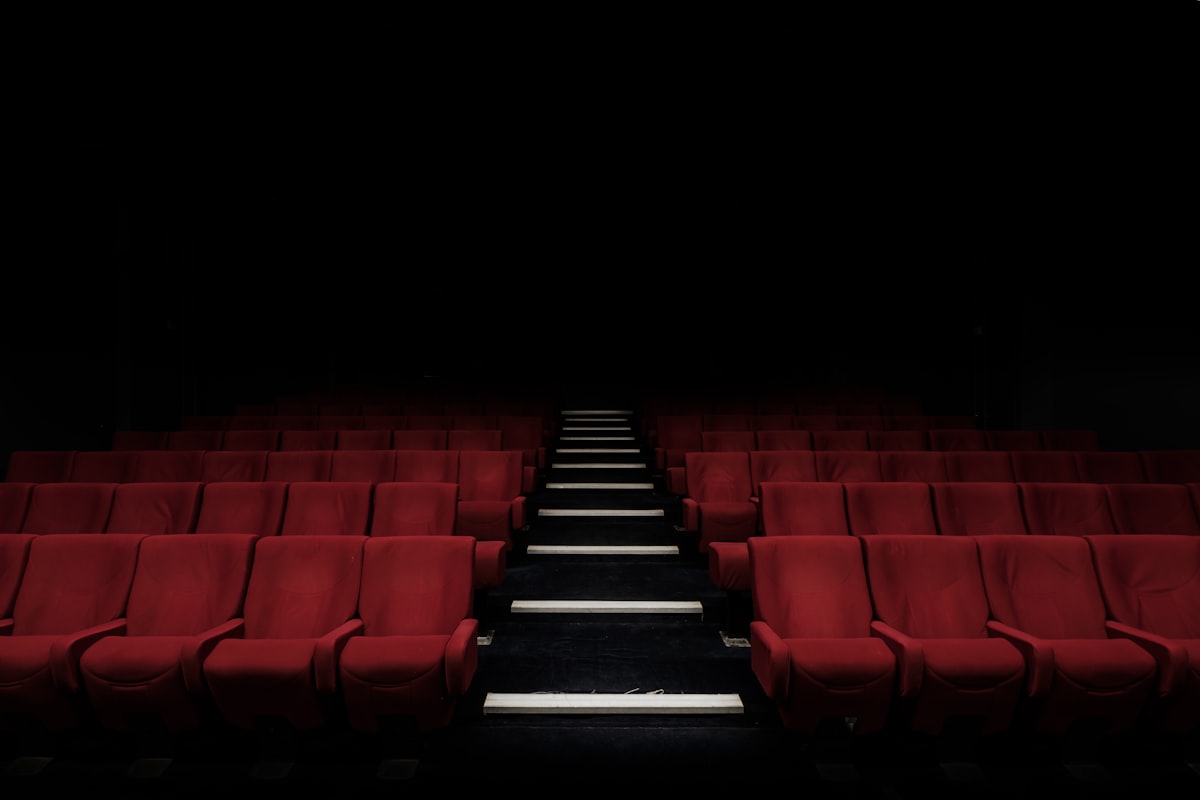
The home theatre was, for most of its existence, an embarrassment. A room in the basement. A large television flanked by speakers of aggressive proportions. Leather recliners in a shade of brown that no designer would willingly specify. The aesthetic was suburban multiplex, shrunk to domestic scale and presented without irony as a luxury amenity — the architectural equivalent of a monogrammed bowling shirt.
The private cinema, as it exists in the upper echelons of contemporary residential design, is something entirely different. It is a purpose-built space in which acoustic engineering, projection technology, interior architecture, and material specification converge to create an environment that surpasses the commercial cinema experience by the same margin that a Michelin-starred kitchen surpasses a fast-food restaurant. The best private cinemas are not rooms with screens in them. They are total environments — spaces in which every surface, every sight-line, every acoustic reflection has been calculated with a precision that commercial operators, constrained by economics and throughput, cannot afford to match.
The Acoustic Foundation
Every serious private cinema begins with acoustics — and acoustics, in this context, means something far more rigorous than hanging absorptive panels on the walls and hoping for the best. The leading specialists in this field (companies like WSDG, Munro Acoustics, and Bowers & Wilkins' installation division) approach a screening room the way a concert hall designer approaches a symphony space: as a three-dimensional acoustic instrument in which every dimension, every surface treatment, and every material selection serves the sound.
The process typically begins with the room's proportions. Acoustic theory identifies optimal dimensional ratios that minimise standing waves — those resonant frequencies that, in poorly designed rooms, cause certain bass notes to boom oppressively while others virtually disappear. The International Telecommunication Union's recommended ratios (1:1.27:1.62, among others) provide starting points, but the best designers treat these as guidelines rather than rules, using computational modelling to simulate the acoustic behaviour of the specific room geometry and adjust accordingly.
Wall treatments in a contemporary private cinema bear no resemblance to the foam panels of the home-theatre era. The current standard involves multi-layer constructions: a structural wall, an air gap, a mass-loaded vinyl barrier (to prevent sound transmission to adjacent rooms), acoustic insulation, a diffusion or absorption layer calibrated to the room's specific modal behaviour, and a fabric-wrapped finish panel that conceals the engineering behind a surface of visual elegance. The fabric itself — typically an acoustically transparent weave from suppliers like Guilford of Maine or Kvadrat — is selected for both its acoustic properties and its aesthetic compatibility with the room's design language.
The Projection Calculus
The projection system in a contemporary private cinema has reached a level of sophistication that would have been unimaginable a decade ago. The current reference standard for ultra-luxury installations is laser phosphor projection — specifically, the professional-grade systems from Barco, Christie, and Sony that deliver true 4K resolution (4096 × 2160 pixels), HDR-grade contrast ratios exceeding 6000:1, and brightness levels of 30,000+ lumens that enable screen sizes of four metres and above without perceptible dimming at the edges.
These are not consumer products. A Barco Freya+ projector — the current choice for the most demanding private installations — costs upwards of €80,000 before installation, calibration, and the custom mounting hardware required to integrate it into the room's architecture without visual intrusion. The screen itself, typically a Stewart Filmscreen or Screen Innovations model, represents another significant investment: a motorised, acoustically transparent, curved screen with gain characteristics matched to the projector's output profile can cost €15,000-€40,000 depending on size and specification.
The alternative — and, in some installations, the complement — is direct-view LED technology. Samsung's The Wall and Sony's Crystal LED systems use micro-LED panels to create seamless displays of virtually unlimited size, with brightness levels, contrast ratios, and colour accuracy that exceed what even the best projectors can achieve. The cost is correspondingly extreme: a 220-inch Crystal LED installation begins at approximately €400,000. But for clients who refuse to compromise — and in this market segment, the refusal to compromise is the defining characteristic — direct-view LED represents the absolute state of the art.
The Seating Architecture
The seating in a private cinema is not furniture. It is architecture — a series of designed objects that must satisfy ergonomic requirements (lumbar support, sight-line geometry, the precise angle of recline that eliminates neck strain during a three-hour film), acoustic requirements (the seats themselves absorb and reflect sound, and their configuration affects the room's acoustic profile), and aesthetic requirements (they must be beautiful, because in a room this meticulously designed, anything less than beautiful is an offence).
The benchmark names in this category — Poltrona Frau's bespoke cinema seating, Ferrier's handcrafted models, Moovia's motorised configurations — produce seats that are individually engineered for each installation. A typical specification includes: full-grain leather or Alcantara upholstery in a colour matched to the room's palette; motorised recline, headrest, and footrest adjustment controlled via a flush-mounted touch panel in the armrest; integrated LED cup holders with beverage cooling; and acoustic profiling that ensures the seat's absorption characteristics complement rather than contradict the room's acoustic treatment.
Sight-line geometry — the science of positioning each seat so that every viewer has an unobstructed, ergonomically optimal view of the screen — requires the same computational precision as the acoustic design. The vertical offset between rows (typically 30-45 centimetres on a raked platform), the horizontal spacing, and the screen-to-seat distance (calibrated to achieve a viewing angle of 36-40 degrees, per THX's reference standard) must all be calculated for the specific screen size and room geometry. In the best installations, every seat in the room — whether it holds four viewers or twenty — provides an experience that equals or exceeds the best seat in a commercial IMAX theatre.
The Control Ecosystem
The integration layer that connects projection, audio, lighting, climate, and seating into a unified system is, arguably, the element that most clearly distinguishes the contemporary private cinema from its home-theatre ancestor. The current standard involves a Crestron, Savant, or Control4 automation platform that manages the entire screening experience through a single interface — typically an iPad application or a dedicated touch panel that allows the viewer to initiate a "cinema mode" with a single gesture.
That gesture triggers a choreographed sequence: the ambient lighting fades through a pre-programmed curve (not a simple dim, but a carefully timed transition from full illumination to screen-wash to complete darkness); the motorised screen descends or the LED wall activates; the projector powers up and auto-calibrates to the content's HDR metadata; the audio processor configures itself for the source material's channel count (whether stereo, 5.1, 7.1.4 Atmos, or the emerging 9.1.6 format); the climate system adjusts to the cinema's optimal temperature (typically 20-21°C, slightly cooler than normal room temperature to account for the warming effect of multiple viewers in an enclosed, acoustically sealed space); and the seating adjusts to each viewer's stored preference profile.
The total duration of this sequence is typically 45-60 seconds — a theatrical pause that serves both a functional purpose (the systems need time to initialise) and a psychological one (the transition from domestic life to cinematic immersion requires a moment of ritual, a threshold-crossing that signals to the viewer that they are entering a different kind of space).
The Design Language
The most significant evolution in private cinema design has been aesthetic. Where the home-theatre era defaulted to a dark, enclosed, fundamentally masculine aesthetic — black walls, black ceiling, the visual language of a nightclub or a man-cave — the contemporary screening room has developed a design vocabulary that is sophisticated enough to integrate with the broader residential architecture.
The leading practitioners in this field (firms like Theo Kalomirakis, CinemaTech, and CEDIA-certified designers working with architectural practices like Olson Kundig or John Pawson) are producing spaces that reference the great picture palaces of the 1920s and '30s — the art deco cinemas of London's West End, the gilded movie theatres of Hollywood's golden age — while incorporating technology that those buildings' architects could not have imagined.
A contemporary private cinema might feature: coffered ceilings with concealed LED cove lighting that shifts colour temperature to match the time of day; wall panels in book-matched walnut veneer with acoustically transparent sections that conceal surround speakers; a custom-woven carpet (typically from Tai Ping or Fort Street Studio) with a pattern that references the room's geometric motifs while providing the acoustic absorption required for an optimally treated floor surface; and an entry vestibule — the "sound lock" — that provides both acoustic isolation and the psychological transition from domestic to cinematic space.
The cost of a private cinema at this level ranges from €200,000 for a sophisticated 8-seat room to €2 million or more for a 20-seat installation with commercial-grade projection, Atmos audio, and bespoke architectural finishes. At the highest end — where the client is commissioning an architect-designed space within a new-build residence — the cinema can represent 5-8% of the total construction budget, making it one of the most significant single-room investments in the house.
But the return on that investment — measured not in financial terms but in the quality of daily life — is difficult to overstate. A properly designed private cinema is not a room you use occasionally. It is a room that changes the way you experience an entire medium: film, television, music, even gaming. It is, in the most literal sense, a space that makes everything you watch in it better than it would be anywhere else. And in a world where the streaming platforms have made virtually every piece of moving-image content available on demand, the limiting factor in the viewing experience is no longer access to content. It is the quality of the space in which you experience it.
Published by Maison Latitudes · Part of the Latitudes Media network