The Grand Pergola: How Outdoor Living Architecture's Most Ancient Structure Became Ultra-Luxury Design's Most Poetically Functional Space
March 27, 2026 · 13 min read
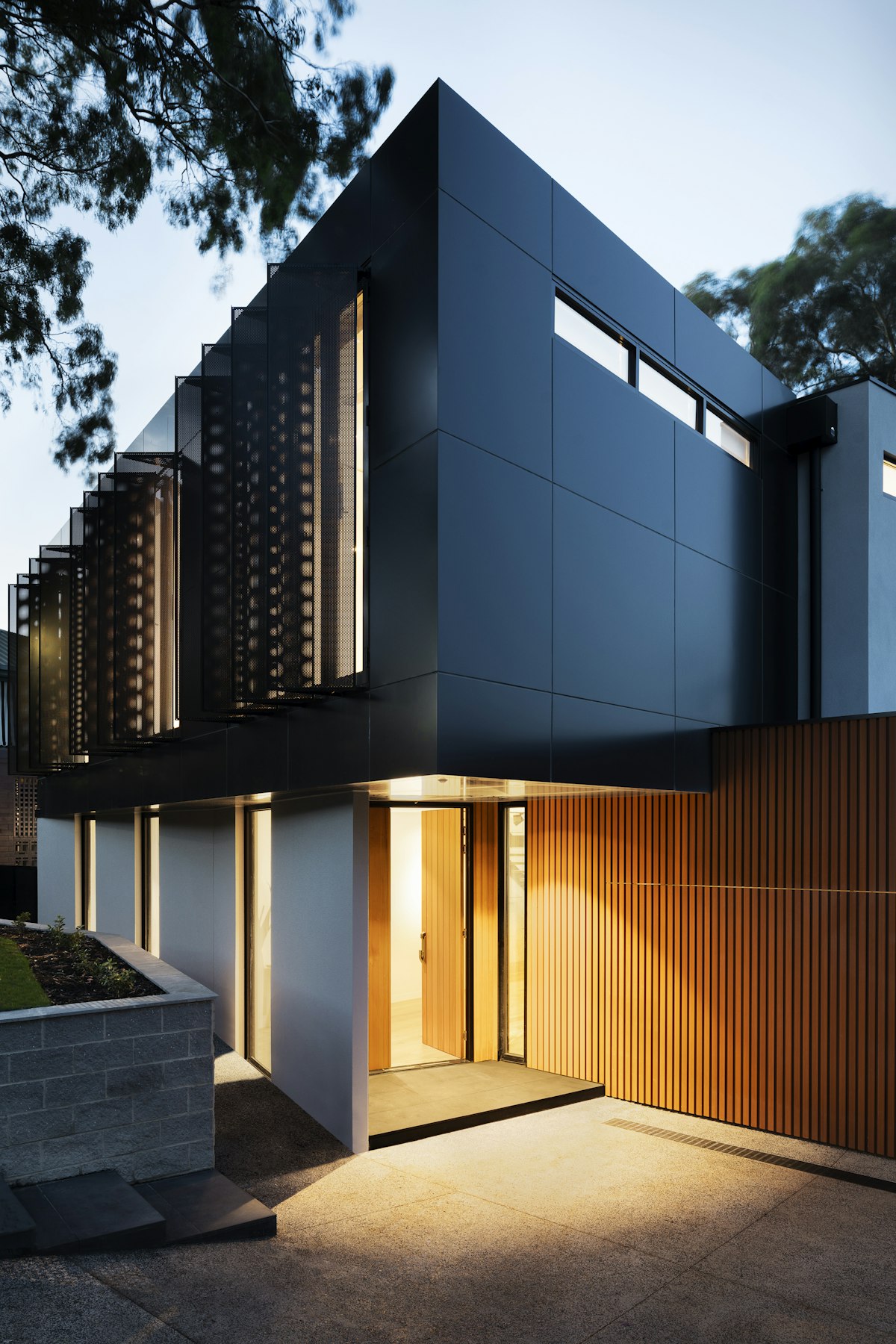
The pergola is architecture's most honest structure. It does not pretend to be a building. It does not fully enclose, does not fully shelter, does not separate the inhabitant from the sky or the weather or the garden that surrounds it. What it does — and this is the source of its enduring appeal across every architectural tradition from ancient Rome to contemporary minimalism — is create a space that is simultaneously inside and outside, covered and open, structured and free. The pergola is a frame for living in the landscape, and in the context of ultra-luxury residential design, where the relationship between built space and natural environment has become the defining preoccupation, the pergola has emerged as perhaps the single most important secondary structure on the contemporary estate.
The Roman Origin: Pergula as Projection
The word pergola derives from the Latin pergula — a projection from a roof, a covered walkway, an extension of the house into the garden. In the Roman villa — that foundational typology of Western domestic luxury — the pergola served a function that was simultaneously practical and philosophical: it provided shade for the ambulatio, the leisured walk that Roman culture considered essential to intellectual and physical health, while creating a transitional space between the formality of the domus and the productive landscape of the estate beyond.
The descriptions in Pliny the Younger's letters of his Tuscan and Laurentine villas include detailed accounts of vine-covered pergolas connecting different sections of the property — structures that defined circulation routes through the garden while creating framed views of the surrounding countryside. The concept of the garden walk as an architectural experience — not merely a path through nature but a curated sequence of views, shadows, fragrances, and spatial transitions — was a Roman innovation, and the pergola was its primary instrument.
The Italian Renaissance: The Pergola as Garden Room
The Renaissance garden, with its geometric precision and its ambition to impose rational order upon nature, elevated the pergola from circulation element to destination. In the great gardens of Tuscany and the Veneto — the Boboli, the Villa Lante, the Villa d'Este — pergolas of stone and timber, draped with wisteria, grape, and jasmine, created outdoor rooms of such spatial definition and sensory richness that they competed with the interiors of the villas they served. The Renaissance pergola was not a lightweight structure but an architectural statement: columns of carved stone, beams of substantial timber, and plantings selected not merely for their vigour but for the quality of light they admitted — dappled, green-filtered, constantly moving with the wind — that no interior room could replicate.
The concept of the pergola as an outdoor dining room — a space where the civilised rituals of the table could be performed under the sky, with the sensory additions of birdsong, flower fragrance, and the particular quality of light that passes through leaves — was codified during this period. The Italian tradition of the pranzo sotto il pergolato (lunch under the pergola) remains one of the most deeply embedded cultural practices of Mediterranean life, and its influence on contemporary luxury outdoor dining design is direct and traceable.
The English Interpretation: Romance and Ruin
The English garden tradition reimagined the pergola through the lens of Romanticism, introducing an element of deliberate imperfection — of picturesque disorder — that the Italian and French traditions had rigorously excluded. The great pergolas of Edwardian England — designed by figures including Edwin Lutyens, Harold Peto, and Gertrude Jekyll — combined robust stone or brick construction with exuberant planting (roses, clematis, wisteria, honeysuckle) that was encouraged to grow with a controlled abandon, creating structures that appeared to be slowly, beautifully, returning to nature.
The partnership between Lutyens and Jekyll — perhaps the most influential architect-garden designer collaboration in history — produced pergolas that remain reference points for luxury garden design. Their work at Hestercombe, Deanery Garden, and Folly Farm demonstrated that the pergola could function as the spatial and experiential spine of an entire garden composition: a linear sequence of framed views, changing light conditions, and seasonal variations that rewarded repeated experience in ways that a static garden room could not.
The West Dean Gardens pergola in Sussex — 100 metres of flint-pillared structure draped with a collection of old rambling roses — represents the English pergola tradition at its most extravagant and most emotionally affecting. Walking through it in June, when the roses are in full bloom and the air is thick with their fragrance, is one of those garden experiences that seems to compress the entire English relationship to landscape — the love of controlled wildness, the tolerance of gentle decay, the belief that beauty and transience are not opposed but inseparable — into a single architectural passage.
The Bioclimatic Revolution: Engineering the Threshold
The contemporary luxury pergola has been transformed by bioclimatic engineering — the integration of motorised louvred roofs, retractable screens, integrated heating and lighting, and automated weather response systems that allow a single structure to function as open pergola, semi-enclosed pavilion, or fully weatherproof outdoor room depending on conditions and the inhabitant's preference. The leading bioclimatic systems — manufactured by firms including Renson, Brustor, and Solisysteme — employ aluminium louvre blades that can be angled from fully open (allowing maximum light and ventilation) to fully closed (providing complete rain protection) in a matter of seconds, controlled by sensors that respond to sun position, wind speed, and rainfall.
The architectural implications of this technology are significant. The traditional pergola was a seasonal structure — usable in fair weather, abandoned in rain. The bioclimatic pergola is a year-round space, extending the functional footprint of the house into the garden for twelve months rather than six. In climates where outdoor living is already the norm — the Mediterranean, the Gulf, coastal California, tropical Asia — bioclimatic pergolas have effectively eliminated the distinction between indoor and outdoor square footage, creating living spaces that are neither one nor the other but a new typological category entirely.
Materials and Proportions: The Architecture of the Frame
The pergola's architectural power derives from its status as a pure frame — a structure defined by its columns, beams, and the spaces between them rather than by walls, windows, or any of the other elements that characterise enclosed architecture. This purity places exceptional demands on proportion and material quality: every column, every beam, every joint is visible and exposed; there is nowhere for mediocre detailing or inappropriate material to hide.
The most successful contemporary pergolas observe several proportional principles that have remained essentially unchanged since Roman times. The column spacing should relate to the column height in a ratio that produces visual stability (a spacing-to-height ratio of approximately 1:1 to 1.5:1 is generally considered ideal). The beams should extend beyond the outermost columns by a fraction of the bay width, creating a visual overhang that grounds the structure in the landscape. And the planting — if the pergola is to be planted — should be given sufficient time and structural support to achieve the quality of green coverage that transforms a bare frame into a living architecture.
Material choices divide broadly into three traditions: stone and timber (the Mediterranean approach, emphasising permanence and the patina of age); painted or stained wood (the English and American cottage tradition, emphasising the relationship between structure and garden); and metal, glass, and engineered materials (the contemporary minimalist approach, emphasising transparency and technological precision). Each tradition produces a pergola of fundamentally different character, and the selection should be driven not by fashion but by the relationship the structure seeks to establish with the house it serves and the landscape it inhabits.
The Outdoor Kitchen Pergola: Gastronomy Under Sky
The convergence of the pergola tradition with the outdoor kitchen revolution has produced a new typology: the culinary pergola, a structure that houses a complete cooking installation — grill, pizza oven, preparation surfaces, refrigeration, sometimes a full commercial-grade kitchen — beneath a pergola roof that maintains the connection to sky and garden that a fully enclosed outdoor kitchen sacrifices. The finest examples, designed by architects who understand both the functional requirements of serious cooking and the experiential requirements of outdoor living, achieve a synthesis that neither a conventional kitchen extension nor a standalone pergola can replicate: a space that is simultaneously a working kitchen, an entertainment area, and a garden pavilion.
The trend toward all-weather outdoor cooking — facilitated by the bioclimatic louvre systems described above — has accelerated this convergence. In the contemporary luxury estate, the pergola kitchen is increasingly the primary entertainment space: the place where the owner cooks, serves, and hosts, not as a warm-weather alternative to the indoor kitchen but as the preferred setting year-round. The appeal is not difficult to understand: to cook and eat under a pergola — hearing the rain on the closed louvres overhead, feeling the evening breeze when they are opened, watching the garden shift through its seasonal changes — is to experience the most fundamental human activities in a setting that amplifies their pleasure immeasurably.
Commissioning: The Essential Questions
For the client contemplating a grand pergola, several questions should precede design. First, function: will this be a dining pergola, a circulation pergola, a garden-room pergola, or a combination? Second, planting or technology: will the overhead canopy be living (vine, wisteria, climbing rose) or engineered (bioclimatic louvres, retractable fabric)? Third, relationship to the house: will the pergola attach to the main building, stand independently in the garden, or connect two structures? Fourth, orientation: morning light or evening light? Sun protection or light maximisation?
The answers to these questions will determine the pergola's form more decisively than any stylistic preference. The best pergolas — like the best architecture of any kind — are those in which the design follows inevitably from the requirements of site, programme, and material. Style, when it appears, is not applied but emergent: the natural consequence of making the right decisions in the right order.
Published by Maison Latitudes · Part of the Latitudes Media network